
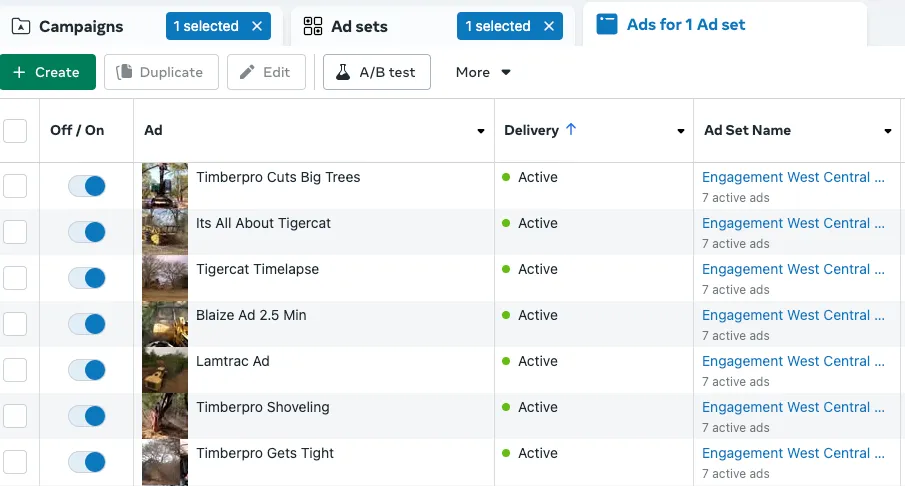
The Facebook ads that work for land clearing, excavation, forestry mulching and demolition companies show real work: before and after shots, machines running, the owner on camera, specific job spotlights and customer reviews, backed by retargeting. Pair them with a lead form that asks about acreage, timeline and location, and call every lead back fast. The ad gets attention, but the form and the follow-up turn it into booked jobs.
The best land service ads don't feel like ads. They feel like proof that you do good work, show up when you say you will and make a landowner's life easier. Below are the five ad types we lean on, plus the targeting, offers, forms, budget testing and follow-up that make them pay.
Why Facebook Ads Work for Dirt Work Companies
Nobody opens Facebook looking for a forestry mulcher. What Meta does well is put your work in front of people who own land, just bought land or build on land, before they start shopping. Heavy equipment stops the scroll in a way a stock photo never will.
The catch is that Facebook leads are colder than search leads. The person wasn't looking for you five minutes ago. Everything below exists to warm them up, filter them and reach them before they forget they asked.
The 5 Facebook Ads That Work for Land Clearing and Excavation
Run at least two or three of these at once so you can see which one your market responds to.
1. Before and After With a Call to Quote
An overgrown lot next to the same lot cleared and ready to build is the simplest, most reliable ad in this industry. Pair it with one clear offer.
Example copy: "From brush to build-ready. Cleared this lot for a new home site last week. Need yours cleared? Get a free quote."
Shoot the before and after from the same spot and angle so the change is obvious. Drone shots work well for larger acreage. Use your own photos, never stock. Local buyers can tell.
2. Machine-in-Action Video
Show the equipment working: a skid steer mulching brush, a dozer pushing out stumps, an excavator loading a truck on a tear-down. Short vertical clips do well on Facebook and Instagram, especially Reels.
The strongest versions stack a few shots into one video: slow motion of the machine, a time-lapse of the job and a drone before and after at the end. Crew footage fits here too, like unloading at sunrise or walking the site before the first cut.
Make it a habit to film 30 seconds of the machine on every job. A crew member with a phone builds you months of ad creative.
3. Owner-on-Camera Intro
People hire people. A short video of the owner in front of the equipment, saying who they are, where they work and what jobs they take, builds trust faster than any graphic.
Cover your name, the area you serve, the jobs you want (lot clearing, ponds, house pads, demolition) and what happens when someone reaches out. Talk like you would on a landowner's property. It doesn't need to be polished. It needs to be real. Absentee owners and first-time land buyers especially want to know who will be on their property.
4. Job Spotlight With Location and Acreage
Name the job. "Cleared [X] acres of cedar for a new home site outside [town]" tells a nearby landowner three things at once: you work in their area, you handle jobs their size and you know their kind of land.
Include the town or county, the acreage, the type of work and what the owner planned to do with the land. Rotate spotlights across your service area and services, so a pond owner, a builder and a hunting land buyer each see a job that looks like theirs. Use the real numbers from your own jobs. Specific beats vague.
5. Testimonial and Review Ads
Have a customer explain their situation and how you helped. A short clip of a landowner or builder on site is best. A Google review over a job photo works too.
Example copy: "We didn't even know where to start. [Your Company] walked the lot, gave us a quote that day and cleared it the next week."
Story beats generic praise. "They were great" says little. "They showed up when they said and kept the mess off our driveway" answers what a new buyer is actually worried about.
Retargeting: The Ad That Closes the Loop
Most people won't reach out the first time they see your ad. Retargeting keeps you in front of the ones who showed interest: people who watched most of a video, opened your form without finishing it, visited your website or messaged your page.
These ads do a different job. The prospect already knows what you do, so show proof and remove doubt with reviews, more job spotlights and answers to common questions (Do you haul debris off? Do I need to be there for the estimate?). Retargeting audiences are small and don't need much budget, but they often produce some of your best leads.
Who to Target and How
The people who hire land clearing and excavation contractors fall into a few groups, and each needs a slightly different message.
- Acreage owners: overgrown pasture, fence lines, trails, wooded land. Speak to reclaiming land, access and fire safety.
- New land buyers: a lot cleared, a driveway cut, a house pad built. Speak to raw land to build-ready.
- Builders: lots cleared and pads prepped on schedule. Speak to reliability and communication.
- Investors: clearing land to sell it for more. Speak to turnaround and how cleared land shows.
- Developers: subdivision and commercial site work. Speak to equipment, crew size and track record.
- Property managers: overgrowth and demolition on managed properties. Speak to responsiveness and clean, documented work.
Keep the settings simple. Meta's automated audiences have gotten good, so the two things most worth controlling by hand are your geography and an audience built from your past customer list.
Think hard about geography. Investors, developers and absentee owners often live in the nearest city and hire contractors to work rural land from a distance. If you only target the county where the dirt is, you may miss the person writing the check. Test adding the closest metro area to your service area, and let the creative do the sorting: a lot clearing ad pulls a different crowd than a pond ad or a barn tear-down ad.
Offers and Calls to Action That Get Real Leads
Keep the offer simple and honest. In this trade, offers about getting started beat discounts:
- Free on-site estimate
- Free quote from photos or a pin drop
- Free property walk with the owner
- Priority scheduling for the season
Seasonal angles work too: defensible space before fire season, a pad ready before building season, pasture cleared before spring. Avoid leading with a low price. "Cheap land clearing" attracts people who want a quarter acre cleared for next to nothing.
Lead Forms and Qualifying Questions
Your lead form is your first filter. A few well-chosen questions save your team hours on calls with people who were never going to hire you.
- How many acres, or how big is the area? Use multiple-choice ranges and set the smallest at your real minimum job size.
- When do you want the work done? As soon as possible, within a few months, or just researching.
- Where is the property? Town, county or ZIP code, so you know right away if it's in your area.
- What kind of work? Lot clearing, mulching, pond, driveway, house pad, demolition.
- Do you own the property? Useful if you get a lot of curious neighbors.
Multiple choice is easier on a phone and easier to sort. A short "anything else we should know?" box at the end gives serious buyers room to say more.
That's the approach that worked for Crosstimber Co., a land clearing company in the Knoxville, Tennessee area. Their jobs need to be big enough to justify hauling the machine out, so their Facebook and Instagram lead form asks the qualifying questions up front with a free on-site estimate offer. Their leads ran $75.91 each, and under $1,000 of ad spend turned into $45,130 in sales, a 2,171% ROI. More stories like it are on our client results page.
Instant Forms vs Landing Pages
Meta gives you a few ways to turn a click into a lead, and they produce very different results.
| Option | Lead volume | Lead quality | Best for |
|---|---|---|---|
| Instant form (inside Facebook) | Highest | Lowest without good questions | Volume and testing new creative |
| Landing page on your site | Lower | Highest | Higher-value services and serious buyers |
| Message or DM ads | Medium | Often high | Buyers who want to ask a question first |
Instant forms fill in the details for the buyer, so people submit with two taps and sometimes forget they did. Qualifying questions and a review screen add useful friction. A landing page asks more, and the people who finish it are usually more serious. A page built for one service in one area, with your own photos, reviews and one clear action, beats sending people to your homepage.
Many contractors run instant forms for volume and landing pages for the bigger jobs. For what each lead actually costs by channel, read the real cost of leads for land clearing, excavation and demolition contractors.
How to Test Your Budget
There's no magic number for Facebook ad spend. It depends on your market, services, job size and how many jobs you can take on. How you test matters more.
- Pick a budget you can hold for a few months. Changing it every few days resets the platform's learning.
- Test creative before audiences. Run two or three of the ad types above to the same audience. Creative usually moves results more than targeting.
- Change one thing at a time, or you won't know what moved the numbers.
- Judge on booked jobs, not cost per lead. Track every lead from form to quote to signed job.
- Scale what books. Raise the budget in steady steps and watch whether lead quality holds.
Follow-Up Speed Decides Who Gets the Job
Facebook leads cool off fast. If someone fills out your form on Sunday afternoon and you call Tuesday, they've forgotten, or someone else got there first.
Set up an instant text reply on every submission, then call as soon as you can and keep following up for days, not hours. Plenty of jobs book on the third or fourth touch. A CRM built for lead follow-up handles the instant text, reminders and follow-up sequence so nothing slips while your crew is in the field.
Dirt Work Advertising: Where Facebook Fits
Facebook is one piece of dirt work advertising, not the whole thing.
- Google Ads catches people searching for land clearing, excavation or demolition right now, so the leads are usually warmer. Google Ads leads for our land services clients have run about $51 to $91 each. Here's how we run Google Ads for excavation companies and land clearing companies.
- Google Maps and SEO put you in local results when people search near them. It takes longer to build but doesn't charge per click. More on Maps and SEO for land clearing, excavation and demolition.
- Facebook and Instagram reach landowners, builders and investors before they search and keep you in front of them until they're ready.
Most contractors who grow steadily run more than one. Google and Maps catch the people looking today. Facebook builds next month's pipeline. Our page on excavation marketing shows how the pieces fit together for dirt work companies.
Don't Just Boost Posts, Build a System
Boosting a post now and then isn't a strategy. These ads work as part of a system: real creative, the right audience, a form that filters, a landing page for big jobs, retargeting and follow-up in minutes.
That's what our team builds every day with Facebook ads for contractors in land clearing, excavation, mulching and demolition. If you want a second set of eyes on your ads, send us a message and we'll tell you what we'd change first.
Frequently Asked Questions
What type of Facebook ad works best for land clearing companies?
Ads that show real work on real jobs perform best: before and after photos, video of the machine running and job spotlights with the town and acreage. Avoid stock photos, which local buyers read as fake. Run two or three styles at once and let the results show which one your market prefers.
Do Facebook ads work for excavation companies?
Yes, when they're set up for the buyer. Ponds, house pads, driveways and site prep look good on camera, and Facebook reaches landowners, builders and developers before they search. Use a lead form with qualifying questions and follow up fast, because Facebook leads are colder than search leads.
Should I use a Facebook instant form or a landing page?
Instant forms bring more leads with less effort for the buyer, but quality is usually lower unless you add qualifying questions. Landing pages bring fewer leads from more serious buyers. Many contractors use instant forms for volume and testing and landing pages for higher-value services.
What questions should a land clearing lead form ask?
Ask how many acres or how big the area is, when they want the work done, where the property is and what type of work they need. Asking whether they own the property also helps. Use multiple-choice answers so the form is easy on a phone.
Are Facebook ads better than Google Ads for land clearing?
They do different jobs. Google Ads catches people already searching for your service, so the leads are usually warmer. Facebook reaches landowners and builders before they search and keeps you in front of them until they're ready. Most growing land clearing and excavation companies run both.