A seamless pattern of black polka dots on a white background.

Best CRM for Land Clearing Companies in 2025 (And How to Use It Right)
Josh Stockel • July 8, 2025
A black circle with a shadow on a white background.
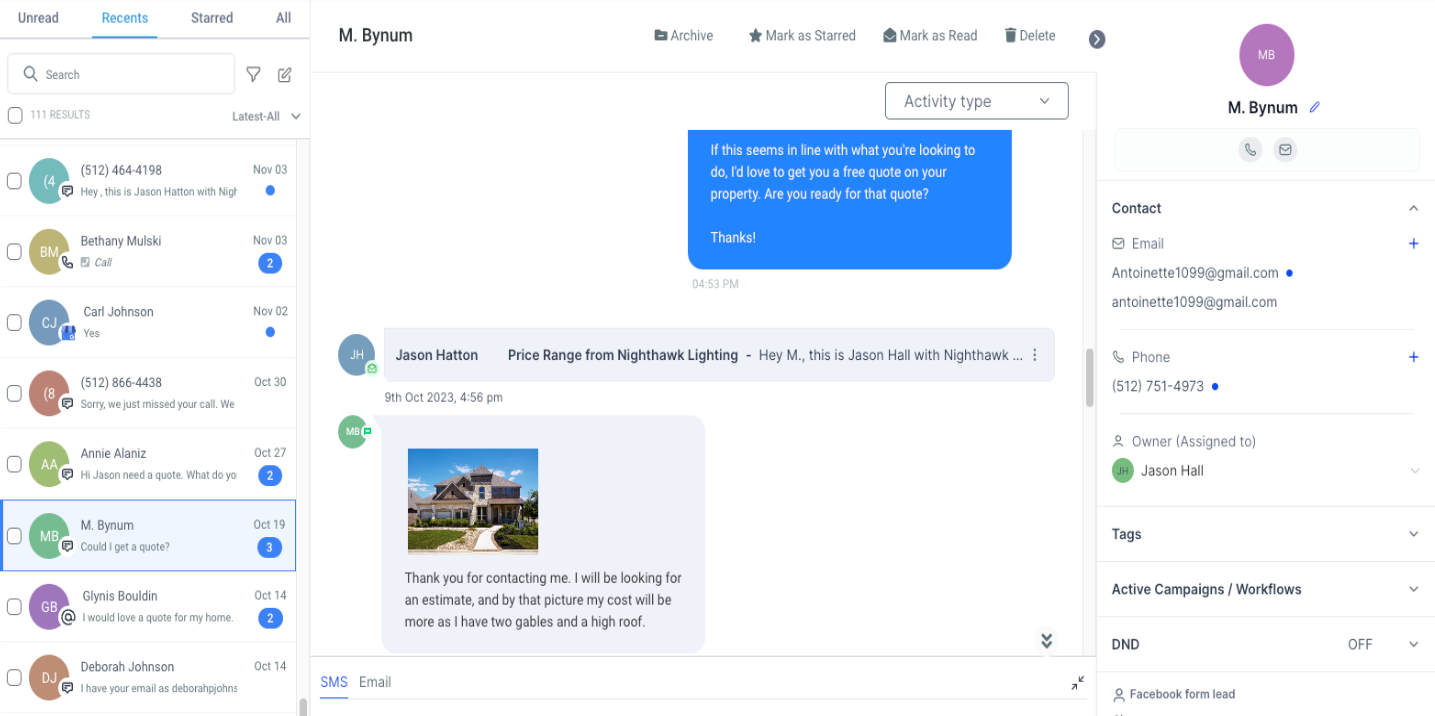
Screenshot of a chat window showing a conversation with attached image of a house.

You finally get a message through your website. Someone fills out your form. Your phone rings. You’re pumped—until you realize the job isn’t a fit, the budget is way off, or it’s not even in your service area.


Welcome to the world of dead leads.


In 2025, if you want to grow without wasting your time chasing junk, you need to build a system that helps you qualify leads upfront—before you ever pick up the phone. Here’s how smart contractors are doing it.


Step 1: Ask Pre-Qualifying Questions

Your quote request form shouldn’t just be name, phone, and email. You want context.


Try adding:

  • What kind of service are you looking for?
  • How soon do you need the work done?
  • What’s the property address or ZIP code?
  • What’s your estimated budget?


This helps you instantly identify good fits—and weed out tire kickers.


Step 2: Use Auto-Responses to Educate

When someone submits a form, have your system auto-reply with:

  • A thank-you message
  • A brief overview of your services
  • Pricing ranges
  • A note on typical project timelines


This sets expectations and helps people self-select before you even call.


Step 3: Create a Red Flag List for You and Your Team

Over time, you’ll start to spot patterns. Leads who say:

  • “I’m just shopping around”
  • “It’s a weird property…”
  • “I’m in no rush—maybe in 6 months”


They’re not necessarily bad—but they shouldn’t go to the top of your call-back list.


Train your team (or yourself) to triage these accordingly.


Step 4: Qualify Over Text Before Booking a Call

In 2025, it’s easier than ever to pre-qualify leads through text. Use SMS to ask:

“Thanks for reaching out! Before we set up a site visit, can you tell me what kind of project you have in mind and the timeline you’re hoping for?”

This saves hours every week.


Step 5: Automate Lead Scoring in Your CRM

If you’re using our Lead Nurturing CRM (or similar), set up automations that:

  • Assign points for “good” indicators (budget, urgency, clear service type)
  • Flag weak leads for nurturing instead of immediate follow-up


It’s like having a virtual assistant qualify every inquiry for you.


Step 6: Don’t Ignore Cold Leads—Nurture Them

Just because someone isn’t ready now doesn’t mean they won’t be later. Drop them into a simple email or text sequence that sends:

  • Project highlights
  • Seasonal tips (“Clear land before spring rains”)
  • Reminders (“Still planning your land clearing?”)


This way, when they are ready, you’re the first call they make.


Your time is valuable. And not every lead is worth your time. Build a filter, stick to it, and spend your energy where it counts.


👉 Want help setting up a CRM system that filters leads for you? Let’s talk

Featured Resources

Check Our Latest Resources
TikTok and Facebook app logos on a keyboard, lit in blue and purple tones
By Josh Stockel May 19, 2026
Google now shows your social media posts directly on your GBP in Search. Learn what the Social Media Updates carousel is, why it matters for local SEO.
By Josh Stockel April 19, 2026
A Practical Guide for Land Clearing, Excavation & Demolition Businesses Artificial intelligence is rapidly changing how people find contractors. Instead of typing a search into Google and clicking through websites, more people are now asking AI tools directly: “Who is the best land clearing company near me?” “What does forestry mulching cost in Georgia?” “Who installs driveways or clears land in [city]?” AI tools like ChatGPT, Google AI Overviews, and Perplexity now answer those questions directly. Instead of showing a list of links, they generate a summarized answer and recommend businesses . This means contractors are entering a new era of online visibility. The goal is no longer just ranking on Google. The goal is being mentioned in the AI answer. Understanding AI Search (LLMs) in Simple Terms AI search tools are powered by something called a Large Language Model (LLM) . An LLM is a system trained on enormous amounts of text from websites, articles, databases, and public content. When someone asks a question, the AI doesn’t “search like Google” and list links. Instead, it analyzes information across sources and generates a summarized answer . Think of it like this: Traditional search User asks → search engine lists websites → user chooses one AI search User asks → AI reads many sources → AI writes the answer In many cases, the AI will also mention or cite specific companies that appear to be trustworthy and relevant. That’s where visibility comes from. AI Results Are Not Rankings A common misunderstanding is thinking AI tools rank businesses the same way Google does. They don’t. Search engines use a ranking algorithm that orders websites by position. AI systems instead evaluate information across multiple sources and choose what to reference in their response. That decision is influenced by signals like: How clearly your services are explained Whether your business appears across trusted websites If your content answers real questions people ask Your reputation and reviews online How structured and understandable your website is In other words: AI chooses sources it trusts and understands. Why This Matters for Contractors Land clearing, excavation, and demolition services are highly local. When property owners ask AI questions like: “Who clears land in [city]?” “What company does forestry mulching near me?” “Best excavation contractor for site prep?” AI tools will look for businesses with strong digital signals. Companies that appear consistently across the internet — with clear service descriptions and strong credibility — are far more likely to be recommended. Businesses that barely exist online are usually invisible. The Foundation: Traditional SEO Still Matters Before a company can appear in AI answers, it must first have strong SEO fundamentals. Search engines and AI systems still rely on many of the same signals: Fast, mobile-friendly websites Clear service pages Strong local SEO Google Business Profile optimization Online reviews and citations Consistent business information Strong SEO creates the data AI systems need to understand your company. Research consistently shows that sites with stronger SEO authority and traffic are more likely to be cited in AI-generated answers. In simple terms: Good SEO feeds AI. What AI Systems Look For AI models favor businesses that demonstrate clarity, authority, and credibility. Some of the strongest signals include: Clear Service Information AI tools prefer websites that clearly explain services like: Land clearing Forestry mulching Excavation Demolition Grading Site preparation Pages that explain exactly what you do — and where you do it — are easier for AI to reference. Structured Content AI systems parse content rather than reading it like humans. Content that is structured with headings, sections, and clear answers is easier for AI to extract and cite. Examples include: FAQ sections service explanations step-by-step guides cost breakdowns definitions of services Brand Mentions Across the Web AI tools do not rely solely on your website. They evaluate information across many sources including: news mentions directories review platforms industry websites blogs and articles Businesses that appear across multiple credible sources are far more likely to be mentioned by AI. Real Expertise AI systems look for signals of expertise and credibility. Examples include: experience in the industry detailed project descriptions photos of real work clear explanations of equipment and process educational content about land clearing or excavation Content that demonstrates expertise is much more likely to be used as a source. Practical Steps Contractors Can Take Today If you want your company to show up in AI results, focus on these fundamentals. 1. Build Service Pages Create clear pages for each core service: Land clearing Forestry mulching Excavation Demolition Grading Driveway installation 2. Build Location Pages Explain where you work: Cities Counties Service areas Local context helps AI match you to nearby searchers. 3. Answer Customer Questions Create content that answers real questions: How much does land clearing cost? What is forestry mulching? How long does excavation take? Do I need permits to clear land? These are exactly the types of questions people ask AI tools. 4. Strengthen Your Google Business Profile Google Business Profiles remain one of the strongest local signals for AI and search visibility. This includes: correct categories service areas photos reviews accurate contact information 5. Earn Online Mentions Try to appear on trusted websites such as: contractor directories local business listings news stories industry blogs partnerships with related companies The more places your business is mentioned, the more likely AI systems are to trust your brand. The Future of Online Visibility Search is evolving quickly. People are moving from: “Search → click website” to “Ask AI → get recommendation” The contractors who invest in their digital presence now will be the ones AI systems recognize and recommend. Those who ignore it will simply never be mentioned. The Bottom Line AI visibility is not about tricking algorithms. It’s about making sure your business is: clear credible and easy for AI systems to understand. When those signals are strong, your company becomes a natural source for AI-generated answers. Want Help Getting Your Company Visible Online? Blue Goat Land Leads specializes in marketing for land clearing, excavation, forestry mulching, and demolition contractors across the United States. Our SEO systems are designed to help contractors: rank in search appear in AI answers generate qualified leads Learn more at LandClearingInsights.com 
By Josh Stockel March 27, 2026
Learn how much it costs to clear land in 2026 with our detailed pricing guide. Get market rates per acre, equipment day rates, overhead calculation, profit margin tips, and bid structure advice for land clearing contractors.