
Construction leads come from two places: bids you chase (plan rooms, bid boards and general contractor relationships) and inbound calls and forms from people who find you (Google, Facebook, referrals and your website). The leads that close best are usually exclusive inbound leads you answer fast. Shared marketplace leads and cold bids can fill your schedule, but they tend to close at lower rates and thinner margins.
This guide breaks down every major source of construction leads, how residential and commercial leads differ, shared versus exclusive leads, and how to measure what each job really costs you to win.
What Are Construction Leads?
A construction lead is any person or company with a project who might hire you, along with a way to contact them. A lead is not a job yet; it becomes one after you qualify it, visit the site, send an estimate and close.
That difference matters. Ten leads that never answer the phone are worth less than two leads who own the land, have a budget and want to start next month. When you compare lead sources, always ask "how many of these turn into paid work?" and not just "how many did I get?"
Types of Construction Leads
Construction leads fall into two main splits: residential versus commercial, and bid leads versus inbound leads. Each type has a different sales cycle, margin and best source.
Residential vs commercial construction leads
- Residential leads come from homeowners, rural landowners and small builders. Think lot clearing for a new home, a pond, a driveway, a house pad or tearing down an old structure. Decisions are usually fast, often within days or weeks, and the person calling is the one who signs.
- Commercial construction leads come from developers, general contractors, property managers, municipalities and businesses. Projects are larger, the sales cycle is longer, and there are usually multiple decision-makers, insurance requirements and formal bids.
Bid leads vs inbound leads
- Bid leads are projects you find and bid on, often against several other contractors. You compete mostly on price, schedule and qualifications.
- Inbound leads are people who reach out to you after finding you through search, ads, social media or a referral. They have already picked you out of the crowd, which usually means less price shopping.
Most healthy dirt-world businesses run a mix: inbound residential work for steady cash flow and margins, and a smaller stream of commercial bids or builder work for volume.
Where to Find Construction Leads
The main sources of construction leads are bid boards and plan rooms, GC and builder relationships, shared lead marketplaces, referrals, Google Ads, Google Maps and SEO, Facebook ads and your own website. Here is how each one works and where it fits.
1. Bid boards and plan rooms
Online bid boards and plan rooms list public and private projects that are open for bids, along with plans and specs. They are a common source of commercial construction leads and public work like municipal site prep. Expect competition, formal bid packages and a lot of estimating time per job won.
2. General contractor and builder relationships
Home builders, developers and general contractors need reliable site work subs over and over. One good builder relationship can produce dozens of lots a year. These relationships are built in person: showing up on time, finishing clean, communicating well and being easy to work with. Ask your best builders who else they know.
3. Shared lead marketplaces
Services like Angi, HomeAdvisor and Thumbtack collect project requests from homeowners and sell them to contractors. They can produce leads quickly without building your own marketing. The tradeoff is that the same lead is often sent to several contractors, so speed and price pressure are high. Fees, rules and lead quality vary by service and market, so read the terms closely before you sign up.
4. Referrals and repeat customers
Referrals usually close at the highest rate of any source because trust is already there. Make them happen on purpose: ask happy customers to refer a neighbor, stay in touch with past clients, and thank people who send work your way. Realtors, surveyors, septic installers and equipment dealers can also be good referral partners.
5. Google Ads
Google search ads put your company at the top of results when someone searches for "land clearing near me" or "excavation contractor in [city]." These are high-intent leads that go only to you. You pay per click, so tight keyword targeting and good tracking are essential. Our guide to PPC marketing for contractors covers setup and budgets.
6. Google Maps and SEO
Ranking in the Google Maps pack and organic results brings in calls without a per-click cost. It takes months to build, but once it is working it becomes one of the lowest-cost sources of exclusive leads you can own. A well-run Google Business Profile with steady reviews is the core of it.
7. Facebook ads
Facebook ads reach property owners in your area before they start searching. They work especially well for visual services like land clearing, forestry mulching and pond building. Lead forms with qualifying questions help filter the list. Crosstimber Co. in Knoxville, Tennessee got 13 leads at $75.91 each from Facebook ads in one month, which turned into $45,130 in sales.
8. Your website
Your website is where most of the channels above send people to check you out. A fast, clear site with real job photos, reviews and an easy quote form turns more visitors into leads.
Commercial Construction Leads: How to Get on the Bid List
Commercial construction leads come mostly from relationships and bid lists, not from ads. The fastest way in is to get prequalified with the GCs and developers who already win work in your area.
- Get your paperwork ready: insurance certificates, bonding capacity if needed, safety program, equipment list and references.
- Make a target list of active general contractors, developers and civil engineering firms in your region.
- Ask to be added to their bid lists and complete their subcontractor prequalification.
- Bid consistently, follow up on every bid, and ask for feedback when you lose.
- Deliver on the first job. In commercial work, your reputation with project managers is your marketing.
Your website and Google profile still matter here. Project managers will look you up before giving you a shot, so make sure your commercial capabilities, equipment and past projects are easy to find.
Shared vs Exclusive Construction Leads
Shared leads are sold to several contractors at once; exclusive leads go only to you. Exclusive leads usually cost more per lead but close at higher rates, which often makes them cheaper per booked job.
With a shared lead, you may be one of three or four contractors calling the same person within minutes. The first one to reach them has an edge, and the conversation often turns to price quickly. With an exclusive lead from your own ads, SEO or referrals, the person reached out to your company specifically, and you have room to sell on quality, schedule and trust.
Shared leads are not useless. They can help when you are just starting or need to fill a slow month. But building your own pipeline of exclusive contractor leads gives you more control over cost, quality and the type of work you get.
Construction Lead Sources Compared
Every construction lead source trades off speed, cost and close rate differently. Use this table as a starting point; actual numbers vary a lot by market, trade and how well you follow up.
| Lead source | Shared or exclusive | Speed to first lead | Typical close rate | Best for |
|---|---|---|---|---|
| Bid boards and plan rooms | Shared (open bidding) | Days | Low, competitive | Commercial and public projects |
| GC and builder relationships | Exclusive or short list | Months to build | High once trusted | Repeat lot and site prep work |
| Shared lead marketplaces | Shared | Days | Low to moderate | Filling gaps in the schedule |
| Referrals | Exclusive | Varies | Highest | High-trust, higher-margin jobs |
| Google Ads | Exclusive | Days | Moderate to high | High-intent residential and small commercial |
| Google Maps and SEO | Exclusive | Several months | Moderate to high | Long-term, low-cost lead flow |
| Facebook ads | Exclusive | Days | Moderate | Visual services and rural landowners |
| Your website | Exclusive | Depends on traffic | Moderate to high | Converting traffic from every other channel |
What Is the Best Way to Get Construction Leads?
The best way to get construction leads for most dirt contractors is a mix of Google search ads, Facebook ads and a strong Google Business Profile, backed by fast follow-up and steady referrals. That combination gives you exclusive leads now and cheaper leads over time.
A practical order to build in:
- Fix your foundation: website, Google Business Profile, reviews and a way to track where leads come from.
- Turn on one fast channel: Google search ads or Facebook ads, depending on your services.
- Set up speed to lead: instant text-back and a callback within minutes.
- Build SEO and referrals in the background so your cost per job drops over time.
- Add commercial bids or builder work if you want larger, steadier projects.
Right On Time Demolition in Houston got 83 conversions in 90 days at $84.59 each and grew revenue 475% in under a year by pairing ads with consistent follow-up. For the full picture of every channel, see our construction marketing guide.
How to Qualify Construction Leads Fast
Qualifying means finding out in the first call whether a lead is worth a site visit. Ask a short set of questions, answer within minutes, and move good leads to the next step the same day.
Speed matters more than most owners think. Many people contact more than one contractor and go with whoever calls back first and seems organized. A good process looks like this:
- Instant text-back when a form comes in or a call is missed.
- A call within minutes during business hours.
- Five qualifying questions:
- Where is the property?
- What needs to be done, and how big is it (acres, square feet, structure size)?
- Do you own the property or are you the decision-maker?
- When do you want to start?
- Do you have a budget range in mind?
- Book the site visit or send a ballpark on that first call when it makes sense.
- Follow up for one to two weeks with texts and calls if they do not book right away.
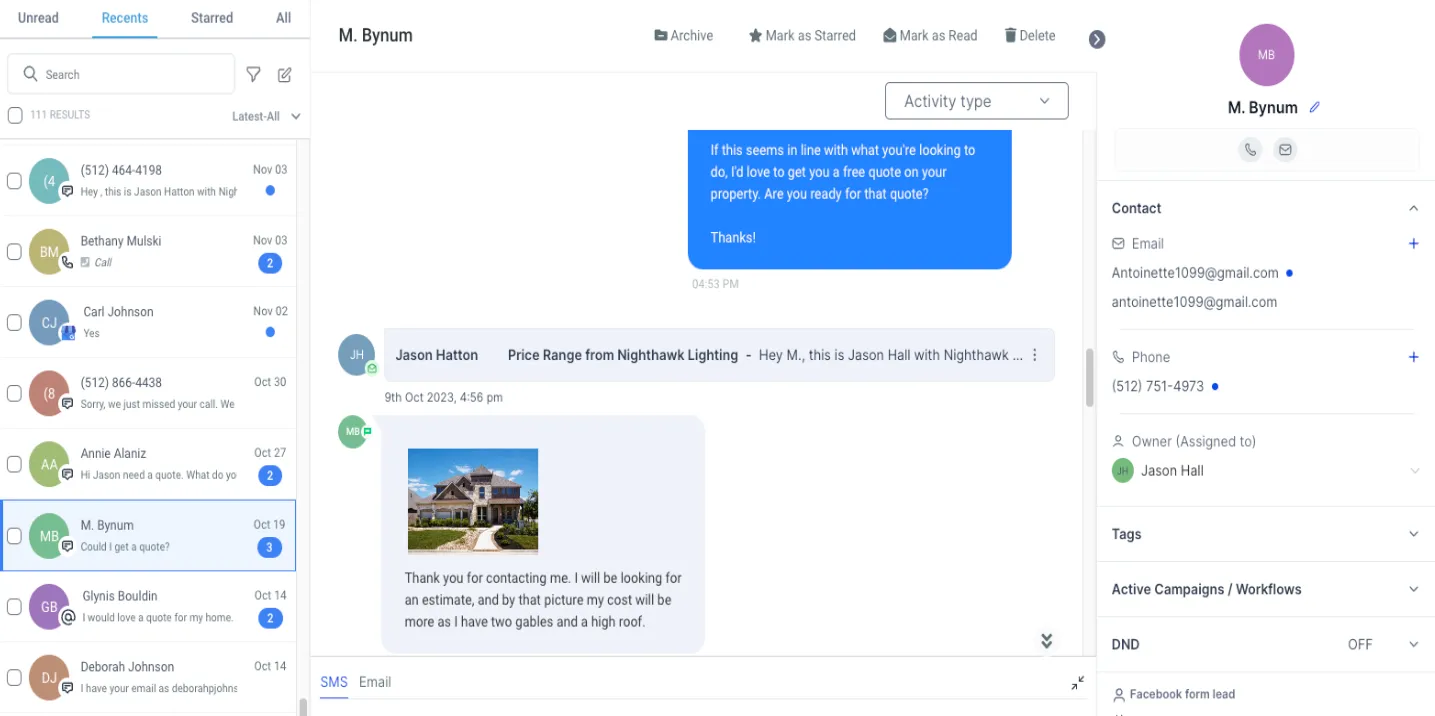
A CRM makes all of this repeatable, even when you are on a machine all day. Our CRM and lead nurturing guide shows how to set up automatic text-back, follow-up sequences and pipeline tracking.
How to Measure Cost per Job, Not Just Cost per Lead
Cost per lead tells you what a phone call costs; cost per job tells you what a paycheck costs. Always judge construction lead sources on cost per booked job and profit per job.
The formula is simple:
- Cost per lead = total spend on a source ÷ number of leads from it.
- Cost per job = total spend on a source ÷ number of paid jobs from it.
- Return = revenue (or gross profit) from those jobs ÷ total spend.
Here is a hypothetical comparison to show why it matters:
- Source A: $40 per lead, but you close 1 in 12. Cost per job is about $480.
- Source B: $110 per lead, and you close 1 in 4. Cost per job is about $440.
The "cheap" leads ended up costing more per job, and they ate more of your time on calls that went nowhere. To track this properly, give each source its own call tracking number or form, tag every lead's source in your CRM, and mark leads as won or lost with the job value. Review it monthly and move money toward what books profitable work. Our clients average a 5x to 15x ROI, and tracking cost per job is a big part of how they get there.
Get More Construction Leads That Actually Close
If you want exclusive construction leads and a follow-up system that turns them into jobs, we can help you map it out. On a short call we look at your current sources, your cost per job and the quickest place to improve.
Book a free strategy call to get a clear plan for your market and services.
Frequently Asked Questions
How do I get construction leads?
Most contractors get construction leads from a mix of referrals, Google Ads, Google Maps and SEO, Facebook ads, builder relationships and bid boards. Inbound channels like Google and Facebook produce exclusive leads that go only to you. Fast follow-up is what turns any of these sources into booked jobs.
What is the best way to get construction leads?
For most residential dirt contractors, the best way is Google search ads and Facebook ads backed by a strong Google Business Profile and quick follow-up. For commercial work, getting prequalified and on GC bid lists matters more. Referrals usually close at the highest rate no matter which type of work you do.
Where can I find commercial construction leads?
Commercial construction leads usually come from bid boards, plan rooms, general contractor bid lists and developer relationships. Get your insurance, safety program and references ready, then ask local GCs to add you to their subcontractor lists. A professional website and Google profile help project managers trust you before the first bid.
Are paid lead services like Angi or HomeAdvisor worth it for contractors?
They can be useful for filling gaps or getting started, since they produce leads quickly. The leads are often shared with several contractors, which raises price pressure and lowers close rates. Track cost per booked job closely and compare it with exclusive sources like your own ads and SEO.
What is the difference between shared and exclusive construction leads?
A shared lead is sold to multiple contractors at the same time, so you compete on speed and price. An exclusive lead comes only to your company, usually from your own ads, website, Google profile or referrals. Exclusive leads often cost more per lead but less per booked job.
How much do construction leads cost?
Costs vary widely by trade, market and source, often from under $50 to several hundred dollars per lead. Larger, higher-value projects typically cost more per lead. What matters most is cost per booked job compared with the profit on that job.
How fast should I respond to a construction lead?
As fast as possible, ideally within minutes during business hours. Many people contact several contractors and hire the one who responds first and seems organized. An automatic text-back and a CRM help you respond quickly even when you are on a job site.
Can I buy construction leads?
Yes, you can buy leads from shared marketplaces and some lead vendors, and you can buy advertising that generates your own leads. Bought leads from marketplaces are usually shared, while leads from your own ads are exclusive. Many contractors start with bought leads and shift toward their own lead generation as they grow.