
Construction marketing is everything you do to get the right property owners, builders and developers to call your company instead of the next contractor. For most land clearing, excavation, demolition and forestry mulching businesses, that means a fast website, a strong Google Business Profile, paid ads on Google and Facebook, quick follow-up on every lead, and steady reviews. This guide covers each channel, what it costs, how fast it works and how to tie it all to booked jobs.
We have been doing digital marketing for contractors in the dirt world since 2016, starting in South Texas. Every section below is a summary with a link to a deeper page, so you can read this start to finish or jump to the channel you care about right now.
What Is Construction Marketing?
Construction marketing is the system that turns strangers with a project into booked jobs for your crew. It covers how you position your company, where you show up online, how you follow up, and how you measure what each dollar brings back.
The mistake most owners make is treating marketing as a single tactic: a Facebook post here, a yard sign there, a website built once in 2019 and never touched. The contractors who grow steadily treat it as a pipeline with four parts:
- Get found. Google search, Google Maps, AI search tools, Facebook and referrals.
- Get chosen. Your website, reviews, photos and how clearly you explain what you do.
- Get the job. Speed to lead, follow-up, site visits and estimates.
- Get it again. Reviews, referrals, repeat builders and past-customer follow-up.
If any one of those parts is broken, spending more on ads only pours more water into a leaky bucket. The rest of this guide walks through each part in order.
Start With Positioning and Your Offer
Positioning is a clear answer to "who do you work for, what do you do, and where?" Before you spend a dollar on construction marketing, you should be able to say it in one sentence.
A strong positioning statement for a dirt contractor sounds like: "We clear and pad residential lots for new homes within 60 miles of Knoxville." A weak one sounds like: "Full-service site work for all your construction needs." The first tells Google, Facebook and the homeowner exactly who should call. The second blends in with every other company on the page.
Work through these questions with your team:
- Which jobs make you the most money? Lot clearing, pond builds, house pads, demolition, driveways, mulching. Lead with those.
- Who hires you for them? Rural landowners, home builders, developers, farmers, municipalities. Each one searches and decides differently.
- What is your real service area? Draw it based on drive time and the jobs worth the trip, not every county you would ever work in.
- Why you? Equipment you own, how fast you can start, cleanup standards, permits handled, the owner on every job. Pick two or three you can prove.
Your offer is what you ask people to do next. "Get a free on-site estimate within 48 hours" converts better than "Contact us." Keep the offer simple and make sure your crew can actually deliver it.
Your Contractor Website: The Hub of Digital Marketing for Contractors
Your website is where almost every channel sends people, so it has to load fast, look good on a phone and make calling you easy. A slow or confusing site wastes the money you spend on ads and SEO.
A website built for construction marketing usually includes:
- A clear headline that says what you do and where, above the fold on mobile.
- A tap-to-call button and a short quote form on every page.
- One page for each core service, written for the people who buy it.
- Service area pages for the towns and counties you actually want work in.
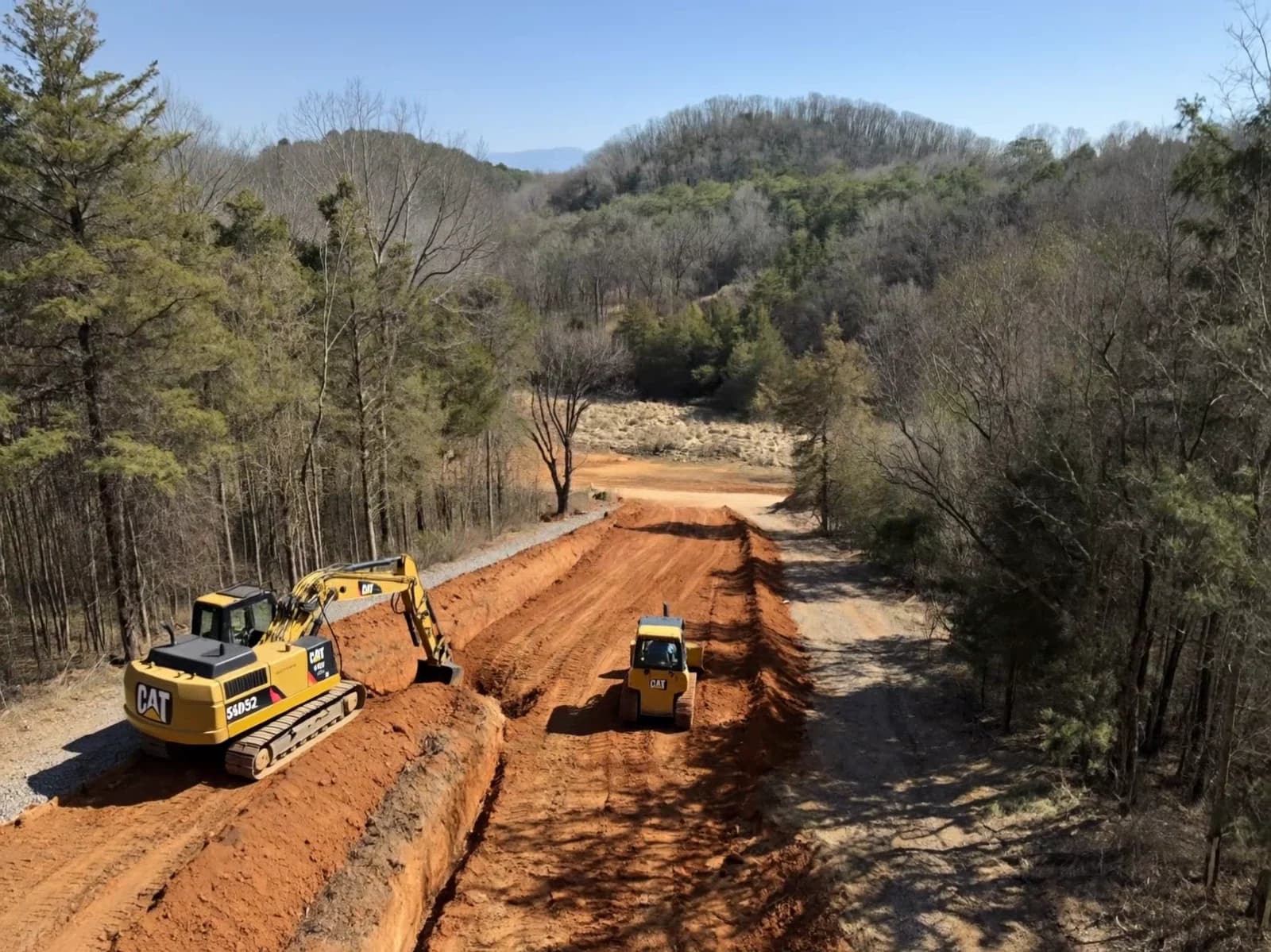
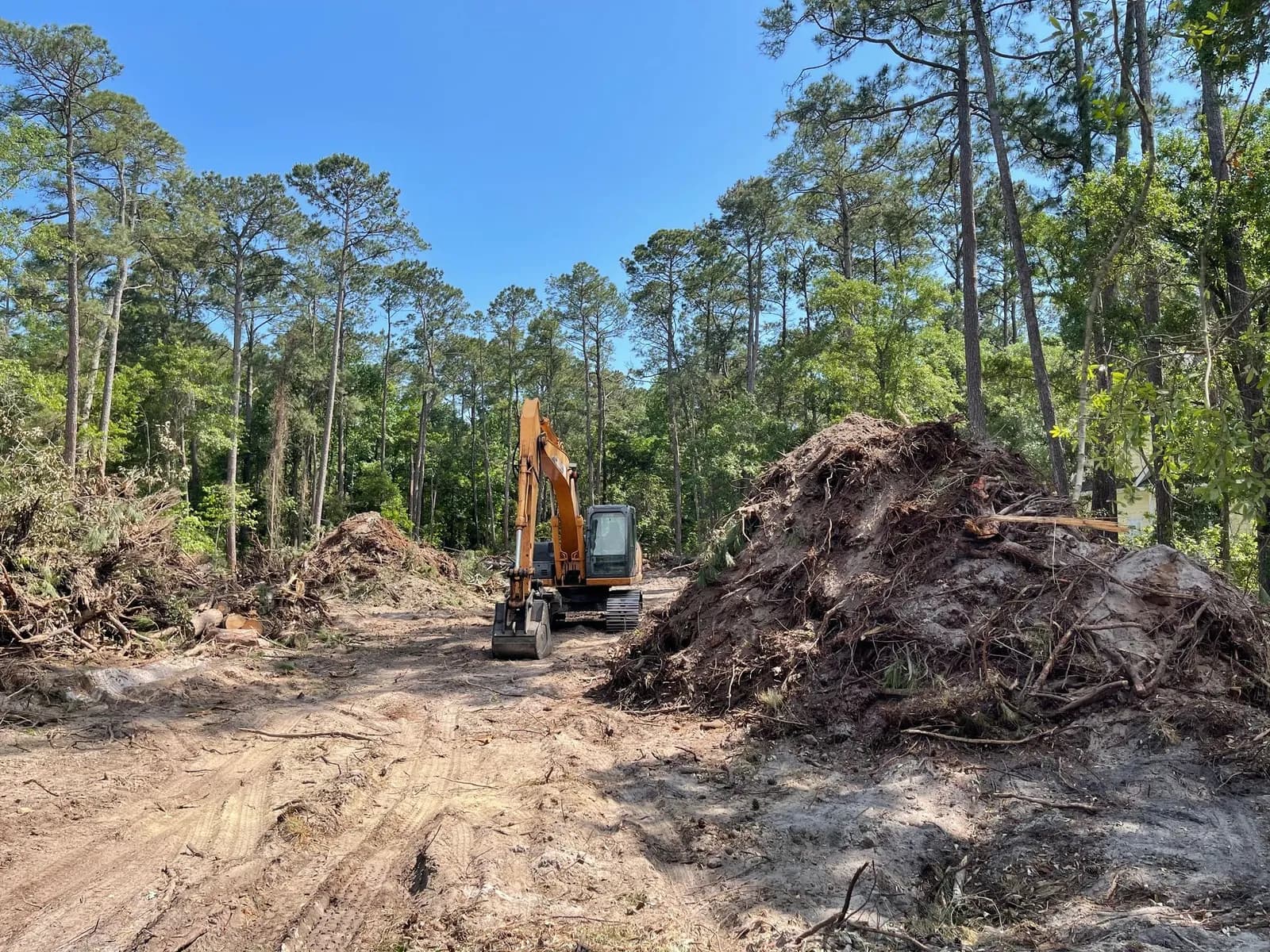
- Real job photos, before-and-after shots and short videos of your equipment.
- Reviews pulled from Google, plus licenses, insurance and years in business.
- Call tracking and form tracking, so you know which channel produced each lead.
Most of your visitors are on a phone, often standing on the property they want cleared. If the site takes more than a few seconds to load or hides the phone number, they hit the back button and call the next result. For a full breakdown of layout, page structure and what to put on each page, read our guide to contractor website design.
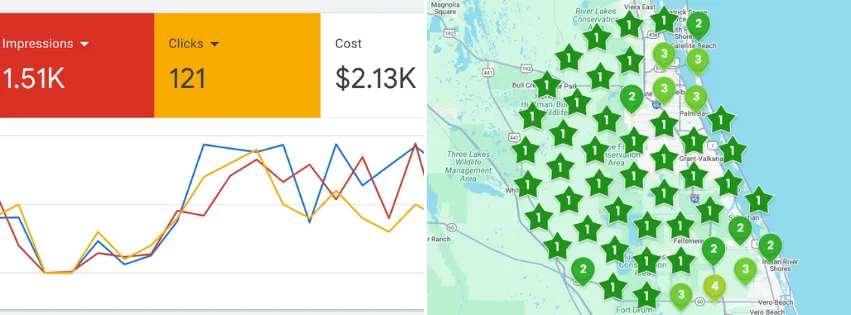
Local SEO and Google Business Profile
Local SEO is how you show up in Google Maps and the organic results when someone nearby searches for your service. It is slower than ads, but the leads cost nothing per click once you rank.
For most dirt contractors, the Google Business Profile (the listing that shows in the map pack) produces more calls than the website itself. The basics that move the needle:
- Pick the right primary category and add secondary categories for every service you offer.
- Set your service area to match where you actually want to work.
- Upload real job photos regularly, not stock images.
- Get reviews steadily and reply to every one.
- Keep your name, address and phone identical everywhere they appear online.
- Post updates on finished jobs and seasonal services.
On the website side, local SEO means service pages and location pages that match what people search, for example "land clearing near me," "excavation contractor in [city]" or "house demolition cost." It also means earning links and mentions from local sources like suppliers, builder associations and chambers of commerce.
Expect SEO to take several months before it produces steady leads, and longer in competitive metro areas. It is a long-term asset, not a quick fix. Our full playbook is on the SEO for land clearing, excavation and demolition page.
AI Search Visibility: Getting Named by ChatGPT and Google AI Overviews
AI search visibility means your company gets mentioned when someone asks ChatGPT, Google AI Overviews or similar tools for a contractor or for advice about a project. It is built on the same foundation as SEO, with extra focus on clear, quotable answers.
More property owners now ask questions like "how much does it cost to clear an acre of land?" or "who does forestry mulching near me?" and get a written answer instead of ten blue links. These tools tend to pull from sources that:
- Answer common questions directly and plainly, near the top of the page.
- Use consistent business details across your website, Google profile and directories.
- Have reviews and mentions on other trusted sites, not just your own.
- Explain services, pricing factors and service areas in specific terms.
Nobody can promise you a spot in an AI answer, and anyone who does is guessing. What you can do is make your business the easiest one for these tools to understand and trust. We cover the specifics in our guide to AI search optimization for contractors.
Google Ads, PPC and Local Services Ads
Google Ads put you at the top of search results today for people who are actively looking for your service. It is the fastest way to get high-intent calls, but you pay for every click, so setup and tracking matter.
Someone typing "excavation contractor near me" or "lot clearing cost" usually has a project and a timeline. That intent is why Google search ads often produce the highest-quality leads of any paid channel. The things that separate profitable campaigns from money pits:
- Tight keywords. Bid on the services you sell in the areas you serve. Block searches like "jobs," "rental," "DIY" and "salary."
- Location targeting. Target people in your service area, not people "interested in" it.
- Dedicated landing pages. Send land clearing clicks to a land clearing page, not your home page.
- Call and form tracking. Optimize toward real leads, not clicks.
- Weekly review of search terms to cut waste.
Local Services Ads (the "Google Guaranteed" or "Google Screened" listings at the very top) charge per lead instead of per click. Availability depends on your trade category and market, so check whether your service is eligible where you work. When they are available, they can be a solid add-on to search ads.
Click costs for dirt-world services vary a lot by market and season, and cost per lead can range from well under $100 to several hundred dollars. Our PPC marketing for land clearing and excavation page goes deeper on campaign structure and budgets.
Facebook Ads and Social Media for Contractors
Facebook ads reach landowners and homeowners in your area before they start searching, which makes them a strong source of volume at a lower cost per lead. Organic social media builds trust, but paid ads are what produce steady leads.
Facebook works especially well for visual, high-ticket services: land clearing, forestry mulching, pond building, pads and driveways. A good video of a mulcher chewing through cedar stops people mid-scroll in a way a search ad never will. What tends to work:
- Video and before-and-after photos from your own jobs.
- Lead forms with qualifying questions like acreage, location, timeline and budget.
- Targeting by location, often by ZIP codes or a radius around your yard.
- Fast follow-up, because Facebook leads cool off quickly.
Here is what it can look like when it is done right. Crosstimber Co. in Knoxville, Tennessee turned $986.86 of Facebook ad spend into $45,130 in sales in one month, from 13 leads at $75.91 each. That is a 2,171% return. Results like that depend on the market, the offer and how fast the leads get called, but they show why Facebook belongs in most contractor plans.
On organic social, post job progress, crew moments and finished results a few times a week. It will not replace ads, but it gives people a reason to trust you when they check your page. See our guide to Facebook ads for contractors for targeting, creative and lead form setup.
Construction Marketing Channels Compared
Each construction marketing channel has a different speed, cost model and best use. Most contractors do best with one fast channel for leads now and one slow channel for cheaper leads later.
| Channel | Speed to first lead | Typical cost type | Best for |
|---|---|---|---|
| Google search ads (PPC) | Days | Pay per click | High-intent buyers searching right now |
| Local Services Ads | Days to a few weeks (verification) | Pay per lead | Eligible trades that want simple per-lead pricing |
| Facebook ads | Days | Pay per impression or result | Visual services, rural landowners, volume at lower cost per lead |
| Google Business Profile | Weeks to months | Time and effort (free listing) | Local calls from Google Maps |
| Local SEO (website) | Several months | Monthly investment in content and links | Long-term lead flow with no per-click cost |
| AI search visibility | Months | Content and reputation work | Showing up in ChatGPT and AI Overviews answers |
| Referrals and builder relationships | Varies | Time, relationships, sometimes referral fees | Repeat work and larger projects |
| Shared lead marketplaces | Days | Pay per lead (shared with competitors) | Filling gaps while other channels ramp up |
For a closer look at lead sources, including bid boards and builder relationships, read our guide to construction leads.
CRM, Speed to Lead and Follow-Up
A CRM is where every lead lands, gets a fast response and gets followed up until it books or says no. For most contractors, fixing follow-up is the cheapest way to get more jobs from the leads you already pay for.
Here is the uncomfortable truth: many contractors lose more jobs to slow callbacks than to competitors. A landowner who fills out three forms will often hire whoever calls first and shows up when they said they would. A simple system fixes most of it:
- Instant text back when a form comes in or a call is missed.
- A call within minutes during business hours, not the next morning.
- A follow-up sequence of texts and emails over the next one to two weeks for anyone who does not book.
- Pipeline stages like New, Contacted, Site Visit, Estimate Sent, Won and Lost.
- Lead source tracking on every contact, so you know which channel produced the job.
Right On Time Demolition in Houston is a good example of a tight system paying off. They got 83 conversions in 90 days at $84.59 each with a 12.83% conversion rate, and grew revenue 475% in under a year. Ads brought the leads; fast, consistent follow-up turned them into revenue. Learn how to set this up on our CRM and lead nurturing page.
Reviews and Reputation
Reviews are the deciding factor for many people choosing between contractors, and they also help your Google Maps ranking. The goal is a steady stream of recent, detailed reviews, not a burst once a year.
A simple review process:
- Ask at the right moment. The day the job wraps and the customer is happy with how it looks.
- Make it easy. Text a direct link to your Google review form. Most CRMs can automate this.
- Ask for details. Encourage customers to mention the service and town. "They cleared 3 acres in Bastrop in two days" helps more than "Great job."
- Reply to every review, good or bad, calmly and professionally.
- Never buy or fake reviews. It breaks Google's rules and can get your profile suspended.
A bad review is not the end of the world. A calm, factual reply often does more for your reputation than the review did against it. At Blue Goat we hold a 5.0 Google rating from 40+ reviews, and we coach clients to treat review requests as a standard step in closing out every job.
Video and Job Site Photos
Real photos and video of your crew and equipment build trust faster than any sales copy. They also make your ads, website and Google profile perform better.
You do not need a film crew. A phone and a habit go a long way:
- Before, during and after shots from the same spot on every job.
- Short clips of 10 to 30 seconds showing equipment working: a mulcher, an excavator loading a truck, a building coming down.
- Owner or crew lead talking to the camera for 30 to 60 seconds about the job.
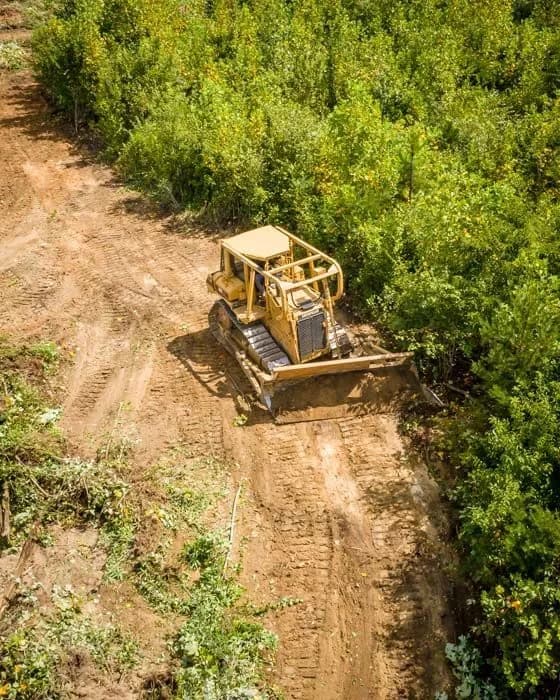
- Drone shots for large clearing and grading jobs where the change is dramatic from above.
Use this footage everywhere: Facebook ads, your Google Business Profile, service pages and social posts. Shoot horizontal for your website and vertical for Facebook and Instagram when you can. Ask for permission before showing a customer's property, and keep personal details out of frame.
Tracking and Budgeting Your Construction Marketing
You should know what you spend, how many leads each channel brings in, and how many of those become paid jobs. Without that, you are guessing, and guessing gets expensive.
How much should a contractor spend on marketing?
There is no single right number. Many established contractors spend somewhere around 3% to 10% of revenue on marketing, with companies in growth mode or entering new markets often spending more. A better way to set your budget is to work backward from the jobs you want:
- Decide how many new jobs you want per month.
- Estimate your close rate on qualified leads. Many contractors close somewhere between 20% and 40%, depending on follow-up and pricing.
- Estimate a realistic cost per lead for your channel and market.
- Multiply it out.
Example ROI math
Here is a simple illustration, not a promise. Say your average land clearing job is $8,000, you close 25% of qualified leads, and your cost per lead is $100.
- To book 5 jobs a month, you need about 20 leads.
- 20 leads at $100 each is $2,000 in ad spend.
- 5 jobs at $8,000 is $40,000 in revenue.
- Your marketing cost per job is about $400, or 5% of the job value.
Change any one number and the math changes, which is the point. Improve your close rate from 25% to 35% and the same ad spend books 7 jobs instead of 5. Our clients average a 5x to 15x ROI, and the ones at the top of that range almost always have tight follow-up.
What to track
- Cost per lead by channel.
- Lead-to-estimate rate and estimate-to-job rate.
- Cost per booked job, the number that actually matters.
- Revenue and gross profit by lead source.
- Speed to first contact on new leads.
Use call tracking numbers, form tracking and a lead source field in your CRM. Review the numbers monthly and move money toward the channels that produce booked jobs, not just cheap leads.
A 90-Day Construction Marketing Plan
A 90-day plan gets the foundation in place, starts lead flow quickly and gives you enough data to make smart decisions by the end of the quarter. Here is a practical version most dirt contractors can follow.
Days 1 to 30: Fix the foundation
- Write your one-sentence positioning and choose your main offer.
- Clean up your Google Business Profile: categories, service area, photos, hours.
- Fix or rebuild your website's key pages so they load fast and make calling easy.
- Set up call tracking, form tracking and a CRM with an instant text-back.
- Start a review request process for every finished job.
- Gather 20 to 30 real job photos and a handful of short videos.
Days 31 to 60: Turn on lead flow
- Launch Google search ads on your top one or two services.
- Launch Facebook ads with job video and a qualifying lead form.
- Build or improve one service page and one location page per week.
- Call every new lead within minutes and log the outcome in the CRM.
Days 61 to 90: Measure and adjust
- Review cost per lead and cost per booked job by channel.
- Cut keywords, audiences and ads that bring tire-kickers.
- Shift budget toward whatever is booking the most profitable work.
- Add content that answers your most common customer questions.
- Set targets for the next 90 days based on real numbers.
TexTerra Solutions had $100K in pipeline three weeks after their ads went live, which shows how quickly paid channels can move when the foundation is ready. SEO and reviews take longer, but by day 90 you should see them starting to pull their weight.
Construction Marketing by Trade
The basics of construction marketing apply to every dirt trade, but the buyers, keywords and best channels are different for each one. Tailor your plan to the work you actually want.
- Land clearing buyers are often rural landowners and new home builders. Facebook video and Google search both perform well. See land clearing leads and marketing.
- Excavation covers pads, ponds, driveways, utilities and site prep, with a mix of homeowners and builders. Google search and builder relationships carry a lot of weight. See excavation leads and contractor marketing.
- Demolition buyers include homeowners, investors, insurance-driven projects and commercial owners. High-intent search terms do much of the work. See demolition leads and marketing.
- Forestry mulching is highly visual, which makes it a natural fit for Facebook and video. See forestry mulching leads and marketing.
Bigger projects often come from a mix of channels. All Seasons Excavating made $125K in profit on a $500K lake build that came from leads we generated, and Clear Grade Contracting has turned their ad spend into more than $1M in revenue.
When to Hire a Construction Marketing Agency
Hire an agency when marketing is eating time you should spend running jobs, or when you are spending money and cannot tell what is working. Do it yourself while you are small and have time to learn; get help once growth depends on it.
Signs it is time to bring in help:
- You are spending on ads but cannot say what your cost per booked job is.
- Leads come in waves and dry up when you get busy and stop marketing.
- Your website, Google profile and ads were set up by different people and nobody owns the whole picture.
- You want to grow into new services or new areas and need a plan, not just more posts.
What to look for in an agency:
- Industry focus. An agency that knows the difference between a forestry mulcher and a skid steer will write better ads and qualify leads better.
- Reporting tied to jobs and revenue, not just clicks and impressions.
- You own your accounts: ad accounts, website, Google profile and data.
- Help with follow-up, not just lead generation.
- Real results they can name, with clients you can look up.
Blue Goat Land Leads works only with dirt-world contractors and has 350+ successful projects behind it. If you want to see how we work, take a look at our construction marketing agency services.
Get a Construction Marketing Plan Built for Your Business
If you want a clear plan for your market, your services and your budget, we will walk through it with you. On a short call we look at where your leads come from today, where money is leaking and which channel to start or fix first.
Book a free strategy call and leave with next steps you can act on, whether you work with us or not.
Frequently Asked Questions
What is the best marketing for construction companies?
For most construction companies, the best mix is a fast website, a strong Google Business Profile, Google search ads and Facebook ads, backed by fast follow-up. Google search catches people who are ready to hire now, while Facebook reaches landowners before they search. The right balance depends on your services, market and budget.
How much should a contractor spend on marketing?
Many established contractors spend roughly 3% to 10% of revenue on marketing, and growing companies often spend more. A better approach is to work backward from how many jobs you want, your close rate and your cost per lead. Track cost per booked job so you know the spend is paying off.
How long does construction marketing take to work?
Paid ads on Google and Facebook can produce leads within days of launching. Local SEO and Google Business Profile improvements usually take several months to show steady results. Most contractors run ads for immediate leads while building SEO for cheaper leads over time.
Is SEO or Google Ads better for contractors?
They do different jobs. Google Ads put you at the top today but cost money for every click, while SEO takes months to build but produces leads without a per-click cost once you rank. Most contractors who grow steadily use both, leaning on ads early and SEO more over time.
Do Facebook ads work for contractors?
Yes, especially for visual services like land clearing, forestry mulching, pond building and site prep. Facebook reaches property owners in your area before they start searching, and lead forms with qualifying questions help filter out tire-kickers. Fast follow-up is critical because Facebook leads cool off quickly.
What is a good cost per lead for contractors?
It varies widely by trade, market and channel, often from under $100 to several hundred dollars per lead. A lead that costs $250 can still be a great deal if the average job is worth $15,000 and you close a good share of them. Judge channels on cost per booked job and profit, not cost per lead alone.
How do I get more construction leads without paying for shared leads?
Build your own lead sources: a strong website, a well-managed Google Business Profile, Google and Facebook ads that send leads only to you, and steady reviews and referrals. These leads are exclusive to your company, so you are not racing three competitors to the same phone number. Shared lead services can fill gaps but should not be your only source.
Should I hire a construction marketing agency or do it myself?
Doing it yourself can work when you are small and have time to learn. Once marketing starts eating time you should spend on jobs, or you cannot tell what is working, an agency that specializes in contractors usually pays for itself. Look for one that reports on booked jobs and revenue and lets you own your accounts.