
To start a demolition business, you need the right equipment for the jobs you plan to take, a properly registered and licensed company, strong liability insurance, and a clear understanding of the asbestos, lead and disposal rules in your area. Most owners start with residential tear-downs, interior demo and concrete removal, then win bigger demolition contracts through general contractors, property managers and steady inbound leads.
This guide covers what to offer, what to buy, the paperwork and environmental rules to check, how to price, and how to keep your schedule full once you open the doors.
Demolition Services to Offer When You Start
Start with services that match your equipment and experience, and add more as you grow. Residential demolition, interior or selective demo, concrete removal and pool removal are common starting points because they need less equipment and lower bonding than large commercial work.
- Residential demolition. Full house tear-downs, garages, sheds, mobile homes and fire-damaged structures. Steady demand from builders, investors and homeowners.
- Interior and selective demolition. Gutting kitchens, bathrooms, offices and retail spaces while protecting what stays. Often done for remodelers and GCs.
- Commercial demolition. Small commercial buildings, strip centers and warehouses. Higher ticket, but more planning, insurance and permitting.
- Concrete removal. Driveways, slabs, foundations, patios and sidewalks. Pairs well with excavation and hauling.
- Pool removal. Partial or full removal and backfill, often for homeowners and real estate sales.
- Site cleanup and land clearing. Debris removal, lot clearing and final grading so the lot is ready to build.
Offering demo plus haul-off, grading and lot prep lets you sell a full package. Customers like one call to go from old structure to buildable lot.
Equipment a Demolition Business Needs
A demolition business can start with a skid steer or compact track loader, a mid-size excavator with a thumb, a dump trailer or truck and basic hand tools. Rent specialty attachments and larger machines until you have enough work to justify owning them.
| Equipment | What it does | Buy, finance or rent |
|---|---|---|
| Excavator with hydraulic thumb (often 12 to 25 tons) | Tear-downs, sorting debris, loading trucks | Finance once you run steady house demos |
| Skid steer or compact track loader | Interior demo support, cleanup, grading, concrete breaking with a hammer | Often one of the first purchases |
| Mini excavator | Tight access, interior and selective demo, pools | Buy or rent depending on job mix |
| Attachments (hammer, grapple, shears, crusher) | Concrete breaking, sorting and processing | Rent at first, buy what you use most |
| Dump truck, dump trailer or roll-off containers | Hauling debris to landfill or recycler | Trailer or subcontract early; truck as volume grows |
| Hand tools and safety gear | Interior demo, cutting, PPE | Buy |
Equipment prices vary by region, hours and condition. A lean start with used or financed equipment often costs less than many owners expect, while a full commercial fleet can run well into six figures. Budget for trucking, because hauling and disposal are often the largest cost on a demo job.
Licensing, Asbestos Surveys and Disposal Rules
Demolition is one of the more regulated trades. Licensing, permit, asbestos, lead and disposal requirements vary by state, county and city, so check with your state licensing board, local building department, state environmental agency and EPA guidance before you take work.
Areas to look into before your first job:
- Business and contractor licensing. Some states license demolition contractors specifically, some include it under general contractor licensing, and some leave it to local jurisdictions.
- Demolition permits. Most cities and counties require a demolition permit, often with utility disconnect letters (gas, electric, water, sewer) before work starts.
- Asbestos inspections. Federal rules for asbestos (under the EPA's NESHAP program) generally require an inspection before demolishing many types of buildings, and states often add their own rules and notification requirements. Asbestos abatement is usually done by separately licensed contractors.
- Lead paint. Older homes may contain lead-based paint. Renovation and selective demo on certain older housing can trigger EPA lead-safe work practice and certification requirements.
- Disposal and recycling. Construction and demolition debris has to go to approved landfills or recyclers. Some materials, like certain appliances, tires, chemicals and hazardous waste, need special handling. Keep your disposal tickets.
- Safety rules. OSHA has specific demolition standards, including an engineering survey before work begins. Train your crew and document it.
Rules change, and they differ a lot between jurisdictions. When in doubt, call the agency before you bid. A job that requires abatement or special disposal you did not plan for can wipe out your profit.
Insurance and Bonding for Demolition Contractors
Demolition carries higher risk than many trades, so plan on paying more for insurance and on customers asking for higher limits. General liability, commercial auto, equipment coverage and workers' compensation are the core policies, and pollution liability is often requested on larger jobs.
- General liability. Many GCs and property managers require specific minimum limits and want to be named as additional insured.
- Contractor's pollution liability. Covers some environmental exposures, such as disturbing materials you did not know were there. Increasingly requested on commercial jobs.
- Commercial auto. For dump trucks, trailers and pickups.
- Equipment (inland marine) coverage. Protects machines and attachments from theft and damage.
- Workers' compensation. Requirements depend on your state and number of employees.
- Bonds. Some licenses require a license bond, and public or larger commercial demolition contracts may require bid, performance and payment bonds.
Work with an agent who writes demolition and excavation contractors. Premiums vary widely depending on your state, experience, payroll, claims history and the type of demo you do, so get quotes before you set your prices.
How to Price Demolition Jobs
Demolition is usually priced as a lump-sum bid built from labor, equipment, trucking, disposal fees, permits and profit. Disposal and hauling often make up a large share of the cost, so price those carefully instead of guessing from square footage alone.
Rates vary a lot by region, access, materials and disposal costs, but these rough ranges can help you sanity-check your numbers:
| Job type | Rough price range | Main cost drivers |
|---|---|---|
| Residential house demolition | Often roughly $4 to $15 per square foot | Size, foundation, basement, disposal fees, access |
| Interior or selective demolition | Often roughly $2 to $8 per square foot | Labor hours, protection of finished areas, haul-off |
| Concrete removal | Often roughly $2 to $6 per square foot | Thickness, rebar, access, recycling options |
| Pool removal | Often several thousand to $25,000+ | Partial vs. full removal, fill, compaction, access |
| Small commercial demolition | Varies widely; usually bid by project | Structure type, surveys, abatement, permits, bonding |
A good demo estimate walks the site, checks for basements and septic tanks, estimates debris tonnage or loads, confirms disposal and recycling rates, includes permits and utility disconnects, and spells out exclusions like asbestos abatement, unknown underground tanks and soil remediation. Salvage and metal recycling can offset some cost, but do not count on it to make a thin bid work.
How to Get Demolition Contracts
Demolition contracts mostly come from general contractors, home builders, insurance restoration companies, property managers, investors, municipalities and homeowners. Each needs something a little different, and the fastest growth usually comes from building repeat relationships with a few of them.
- General contractors and builders. Need reliable demo and site prep before new construction. Get prequalified, keep your insurance certificates ready and hit your start dates.
- Insurance restoration companies. Fire, flood and storm damage create steady interior and full demolition work. Respond fast and document everything with photos.
- Property managers and commercial owners. Tenant improvements, interior gut-outs and outbuilding removals. They value clean, quiet, on-schedule crews.
- Real estate investors and developers. Tear-downs for infill lots and redevelopment, often repeat buyers.
- Municipalities. Many cities bid out removal of condemned or abandoned structures. Register as a vendor and watch local bid boards. Requirements vary by agency, so read every bid package fully.
- Homeowners. Garages, sheds, pools, driveways and full tear-downs before a rebuild. These customers find you on Google and Maps.
To win more of these demolition contracts, build a one-page capability sheet with your services, equipment, insurance limits and photos, call on GCs and restoration companies in person, and follow up after every bid. Price from real costs instead of trying to be the cheapest, because demo jobs are full of surprises.
Marketing a Demolition Business for Steady Leads
The demolition business owners who grow fastest stop relying only on referrals and build a lead source they control. For most, that means a strong Google Business Profile, a website with real job photos, local SEO and paid search ads aimed at the jobs they want.
- Google Business Profile. Complete it, post real job photos, list your services and ask every customer for a review.
- A website that converts. A page for each service (house demolition, concrete removal, pool removal, interior demo), your service area and an easy way to call or request a quote. A purpose-built contractor website makes a big difference here.
- Google Ads. People searching "demolition contractor near me" are often ready to hire. PPC marketing lets you show up for those searches right away.
- Facebook ads. Useful for reaching homeowners and investors in your area with before-and-after photos and video.
- Fast follow-up. Demo leads often call several companies. The contractor who calls back first frequently wins.
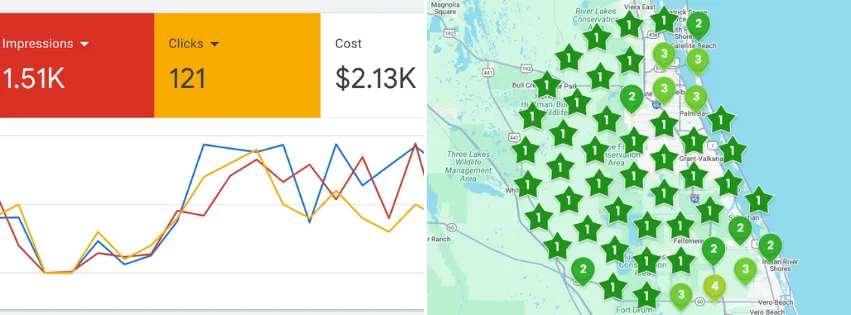
Here is what that can look like. Right On Time Demolition in Houston grew revenue 475% in under a year, from $40K to $50K a month to about $150K, after a PPC campaign that produced 83 conversions in 90 days at $84.59 each, a 12.83% conversion rate. If you want to see how we build campaigns like that, here is how our demolition marketing works.
Ready to Grow Your Demolition Business?
Blue Goat Land Leads has worked only with demolition, excavation, land clearing and forestry mulching contractors since 2016. We build the websites, Maps rankings and ad campaigns that bring in demolition jobs worth taking, and our clients average 5x to 15x ROI.
Whether you are just starting or ready to scale, let's talk about your market and the work you want more of. Book a free strategy call and we will show you where your next demolition contracts can come from.
Frequently Asked Questions
How much does it cost to start a demolition business?
Costs vary widely by region and how much equipment you buy new versus used or rented. A lean start with a used skid steer, a financed excavator, a dump trailer, insurance and licensing can often be done for less than a full commercial fleet, which can run well into six figures. Insurance and disposal costs are often higher than new owners expect.
Is a demolition business profitable?
It can be, especially when you price disposal and hauling accurately and keep your equipment busy. Profit depends on estimating carefully, controlling dump fees, recycling metal and concrete where possible and avoiding surprises like asbestos or buried tanks. Packaging demo with site prep and grading can also raise your margins.
Do you need a license to start a demolition business?
It depends on where you work. Some states require a specific demolition or contractor license, others regulate it at the city or county level, and most local jurisdictions require demolition permits. Asbestos and lead rules add separate requirements, so check with your state and local agencies before you take jobs.
How do I get demolition contracts?
Build relationships with general contractors, home builders, insurance restoration companies, property managers and investors, and register as a vendor with local municipalities. Keep a ready prequalification package with insurance and license details. For homeowner and investor work, a strong Google presence and paid ads bring in steady inbound leads.
Do I need an asbestos survey before demolition?
In many cases, yes. Federal EPA rules generally require an asbestos inspection before demolishing many types of buildings, and states often add notification and survey requirements. Rules vary by building type and location, so confirm with your state environmental agency before you start.
What equipment do I need for demolition?
Most demolition contractors start with an excavator with a thumb, a skid steer or compact track loader, a way to haul debris and hand tools for interior work. Attachments like hydraulic hammers, grapples and shears are often rented until you use them regularly. Your job mix should decide what you buy first.
How do demolition companies price their jobs?
Most demolition jobs are bid as a lump sum based on labor, equipment, trucking, disposal fees, permits and profit. Some contractors also quote per square foot as a starting point for residential work. Disposal and hauling are often the biggest variable, so price them from real local rates.