
Forestry mulching contracts come from private landowners, ranches, homebuilders, fire mitigation work, utilities and right-of-way clearing, and government bids. The fastest way to get more forestry mulching jobs is to show your machine working in short videos on Facebook ads, rank in Google Maps for "forestry mulching near me," and bid selectively on public and utility work for extra volume.
A forestry mulching business has a big advantage: the work looks great on camera, and landowners love that there are no burn piles or haul-off. This guide covers where the jobs are, how to price them, and how to keep a mulcher busy year-round.
Where Forestry Mulching Contracts Come From
Most forestry mulching contracts come from private landowners and ranches, with builders, fire mitigation, utilities and public bids filling in the rest. The mix depends heavily on your region.
| Source | Typical jobs | Why it is good work |
|---|---|---|
| Private landowners | Lot clearing, trails, view clearing, overgrown acreage, fence lines | Better margins, fast decisions, lots of referrals |
| Ranches and farms | Cedar and brush control, pasture reclamation, hunting lanes and food plots | Larger acreage and repeat work as brush grows back |
| Fire mitigation and defensible space | Clearing brush around homes, fuel breaks, firebreaks | Growing demand in fire-prone areas, often recurring |
| Builders and developers | Lot clearing before construction, subdivision underbrushing | Steady volume from a few relationships |
| Utilities and right-of-way | Power line, pipeline and easement clearing and maintenance | Long-term, repeat contracts once you are prequalified |
| Government bids | Parks, trails, fuel reduction, roadside and drainage clearing | Reliable payment and large projects, but price-driven |
Before you chase all six, look at what your area actually has. A mulcher in the Texas Hill Country may live on cedar and ranch work, while an operator in a wildfire-prone western county may stay busy with defensible space. In a fast-growing suburb, builders and lot clearing could be most of the calendar. Pick the two or three sources that fit your machine and your market, then build your marketing and bidding around them. Spreading yourself across every type of job usually means doing none of them as well as the competitor who specializes.
Private Landowners, Ranches and Cedar Clearing
Private landowners and ranchers are the bread and butter for most mulching operators. They want land they can use, see and enjoy, and mulching gives them that without dozer scars, burn piles or hauling.
Common jobs in this group include clearing cedar and mesquite from pasture, opening up wooded lots for a homesite, cutting trails and shooting lanes, cleaning up fence lines, and controlling regrowth on land cleared years ago. Many of these customers find you on their phone, so your Google listing and social media matter more than any bid board.
Ranch and cedar work often turns into repeat business. Brush grows back, and a rancher who liked your first job will call again in a few years, or tell the neighbor over the fence.
Fire Mitigation, Utilities and Right-of-Way Work
Fire mitigation and right-of-way clearing are two of the most steady forms of mulching work, especially in fire-prone and utility-heavy regions. Both reward operators who are reliable, insured and safety-minded.
- Defensible space and fuel reduction. In many fire-prone areas, homeowners, HOAs and local governments pay to thin brush around homes and create fuel breaks. Some areas have cost-share or grant programs, but rules vary by state and county, so check what applies locally.
- Utility right-of-way. Electric co-ops and utilities keep lines clear on a schedule. Getting on an approved vendor list usually takes prequalification, safety documentation and sometimes specific training.
- Pipeline and easement work. Pipeline and telecom companies need corridors kept open. These are often larger contracts that suit bigger mulchers.
How to Win Forestry Mulching Contracts on Bid Boards
Public forestry mulching jobs for bid are posted on SAM.gov, state procurement and forestry agency portals, and county and city bid pages. Search for terms like "mastication," "fuel reduction," "vegetation management" and "brush clearing," not just "forestry mulching."
To give yourself a real shot at winning:
- Register as a vendor on federal, state and local portals, and set up email alerts for new postings.
- Attend pre-bid site walks. Vegetation density and terrain change your production rate more than acreage does.
- Read the specs closely. Mulch depth, maximum chip size, stump height, buffer zones and seasonal restrictions all affect your price.
- Submit complete paperwork on time, with current insurance, references and photos of similar work.
- Study the results. Many agencies publish bid tabulations. Learn what winning prices look like in your area.
Treat bids as volume, not your whole plan. Public work is competitive, often pays slower, and can disappear when budgets change.
How to Price Forestry Mulching Jobs
Most operators price forestry mulching per acre or per hour, based on vegetation density, tree size, terrain and access. Pricing varies widely by region, vegetation density and terrain, so build your rates from your own costs and local market, not someone else's price sheet.
- Vegetation density and tree size: light brush and saplings go fast, while dense growth and larger trees slow production and add wear on teeth.
- Terrain and access: slopes, rock, wet ground and tight gates all cut acres per day.
- Finish expectations: a rough knock-down costs less than a park-like finish with low stumps.
- Per acre or per hour: per-acre pricing suits predictable ground, while hourly pricing with a minimum protects you on mixed or uncertain jobs.
Always build in mobilization and a minimum, because hauling a mulcher an hour each way for a half-acre job is a loss at most per-acre rates. Walk the property or get video from the customer before quoting. For current market rates and a customer-friendly explanation of what drives price, see our guide on land clearing costs.
Using Facebook Ads to Get Forestry Mulching Jobs
Video-led Facebook ads are one of the most effective ways to get private forestry mulching jobs, because landowners can watch your machine turn overgrown land into usable ground in a few seconds. That before-and-after moment does the selling for you.
What tends to work well:
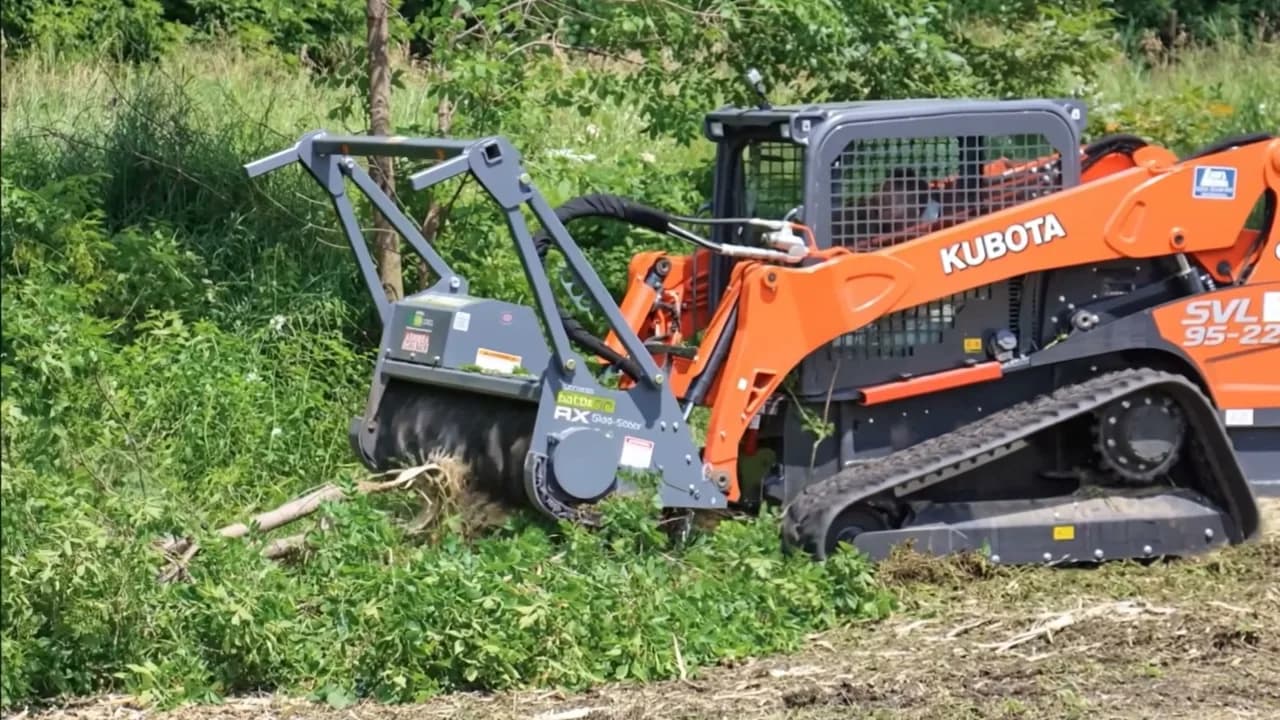
- Short, real job footage. A 15 to 30 second clip of your mulcher chewing through brush, then the finished result.
- Tight targeting. Aim at landowners and rural ZIP codes in your service area, not the whole state.
- A simple offer. "Get a free quote for clearing your land" with a short form that asks for location, acreage and photos.
- Fast follow-up. Call new leads within minutes. A lead that waits two days often already hired someone else.
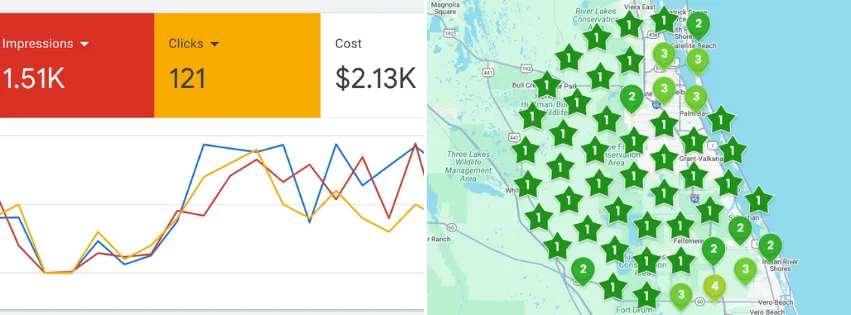
Results like these are possible when it is set up right: Clear Cut Heavy Brush Mulching in Tampa got 41 calls and 130 leads in 90 days, and Crosstimber Co. in Knoxville turned $986.86 of Facebook ad spend into $45,130 in sales in one month. Learn more about how we run Facebook ads for contractors.
Getting Found on Google Maps
When a landowner searches "forestry mulching near me," the Google Maps results are usually the first thing they see. A complete, active Google Business Profile is one of the cheapest ways to get high-intent calls.
- Pick the right categories and list forestry mulching, land clearing and brush removal as services.
- Set your service area to the counties and towns you actually want to work in.
- Post real job photos and short videos regularly, with the town name in the description.
- Ask every happy customer for a review, and reply to each one.
- Back it up with a website that has a page for forestry mulching and the areas you serve. Strong local SEO helps both your website and your Maps listing rank.
Put Maps, Facebook ads and a website together and your forestry mulching business stops depending on whoever happens to remember your name. That is the system behind our forestry mulching lead generation programs.
Keep Your Mulcher Busy Year-Round
Your mulcher only makes money when it is running. If you want a steady flow of private mulching jobs at prices that make sense, we can help you build it.
Book a free strategy call and we will look at your service area, your equipment and how to put more profitable forestry mulching contracts on your calendar.
Frequently Asked Questions
How do I get forestry mulching contracts?
Register as a vendor on SAM.gov and your state and county procurement portals for public work, and reach out to utilities and builders about getting on their contractor lists. For private work, run video-led Facebook ads and build a strong Google Business Profile. Most successful operators combine both so their schedule does not depend on winning bids.
Is a forestry mulching business profitable?
It can be, because mulching jobs often carry solid per-acre rates and no debris hauling. Profit depends on keeping the machine busy, pricing to cover your true hourly cost, and controlling maintenance and wear parts. Slow seasons and underpricing are the biggest risks.
How much do forestry mulching companies charge per acre?
Pricing varies widely by region, vegetation density and terrain. Light brush on easy ground costs much less per acre than dense growth, larger trees or steep, rocky land. Many operators also charge by the hour with a minimum job fee, and our land clearing cost guide lists current market rates.
Where can I find forestry mulching jobs for bid?
Look on SAM.gov, state forestry and procurement portals, and county and city bid pages. Search terms like mastication, fuel reduction, vegetation management and brush clearing, since agencies do not always use the words forestry mulching. Utilities and electric co-ops also hire for right-of-way work through their own vendor programs.
How many acres can a forestry mulcher clear in a day?
It depends on the machine, the vegetation and the terrain. A compact track loader with a mulching head might clear around one to a few acres a day in light to moderate brush, and less in heavy growth. Larger dedicated mulchers can cover more ground.
What is the best way to advertise forestry mulching services?
Short before-and-after videos of your machine working, run as Facebook ads to landowners in your service area, are one of the most effective options. Pair them with a Google Business Profile full of job photos and reviews, plus a website with a quote form. Calling new leads back quickly matters as much as the ads themselves.