
Land clearing jobs for bid are posted on federal, state, county and city procurement sites, utility and right-of-way vendor programs, and through builder and developer bid lists. To win land clearing contracts consistently, register on the right portals, bid only on jobs that fit your equipment and margin, and build relationships with the general contractors and developers who hand out work without a public bid.
Bid work can add solid volume, but it is also the most price-driven work you will ever chase. This guide covers where the bids are, how to bid them without losing money, and why the most profitable owners pair bidding with their own steady stream of private leads.
Where to Find Land Clearing Jobs for Bid
Most land clearing jobs for bid come from five places: federal contracting sites, state and DOT procurement portals, county and city bid pages, utility and right-of-way programs, and private builders and developers. Each has different paperwork, job sizes and competition.
| Bid source | Typical work | What you usually need |
|---|---|---|
| SAM.gov (federal) | Clearing on military bases, federal land, forests and parks | SAM registration, UEI number, insurance, often bonding on larger jobs |
| State DOT and state procurement portals | Roadside clearing, right-of-way, highway projects (often as a subcontractor) | Vendor registration, prequalification on some work, insurance |
| County and municipal bid sites | Park trails, drainage ditches, lot clearing, storm cleanup | Vendor registration, insurance certificate, sometimes local licensing |
| Utility and right-of-way programs | Power line, pipeline and easement clearing and maintenance | Contractor prequalification, strong safety record, often specific training |
| Conservation and land programs | Brush management and habitat work funded through landowner cost-share programs | Usually hired by the landowner, who follows the program's rules |
| Builders, developers and GCs | Lot clearing, subdivision clearing, site prep | Insurance, references, fast turnaround and a good relationship |
Requirements change by agency and contract size, so read every bid package carefully. The details above are typical, not guaranteed.
Public Bid Boards: Federal, State, County and City
Public bid boards list land clearing contracts that government agencies are required to advertise. The work is real and the checks clear, but you will compete mostly on price and paperwork.
- SAM.gov. The federal government's contracting site. Register your business (it is free through the official site), then search for land clearing, brush removal, vegetation management and related NAICS codes. Many federal jobs are set aside for small businesses.
- State DOT and procurement portals. Most states run a central vendor portal plus a separate DOT letting system. Large highway jobs usually go to prime contractors, so the realistic play is often subcontracting clearing to the prime.
- County and city bid pages. Check your county purchasing department and nearby city websites. These jobs are often smaller and more local, which suits a one- or two-machine outfit.
- Regional bid aggregators. Some paid services collect public bids from many agencies into one feed. They can save time if you are bidding regularly.
Set up saved searches or email alerts so new postings come to you. Bid windows are often short, and missing a pre-bid meeting can disqualify you.
Utility, Right-of-Way and Conservation Work
Utility and right-of-way clearing is steady, repeat work, but it usually requires prequalification, a strong safety program and sometimes specialized equipment. Conservation programs are a different path, where the landowner gets funding and hires you.
Electric co-ops, pipeline companies and telecom providers often keep approved vendor lists for easement clearing and maintenance. Getting on those lists can take time, so start with smaller co-ops and municipal utilities near you, and ask what their prequalification process looks like.
On the conservation side, federal and state programs (such as those run through USDA's Natural Resources Conservation Service in many areas) may help landowners pay for brush management, cedar removal or habitat improvement. Program names, rules and payment rates vary by state and change over time, so do not promise a customer they qualify. What you can do is learn how the programs work in your area, so landowners who are already enrolled see you as the contractor who knows the process.
Builder, Developer and GC Relationships
Some of the best land clearing contracts never hit a public bid board. Builders, developers and general contractors often hand clearing work to a short list of subs they trust to show up, work clean and finish on time.
To get on that short list:
- Make a target list. Look at who is pulling permits and building subdivisions in your area. Drive the job sites and note the names on the signs.
- Show up prepared. Bring a one-page capability sheet with your equipment, service area, insurance and a few before-and-after photos.
- Ask to be on the bid list. Many GCs keep a sub list by trade. Ask how they send out invitations to bid.
- Win the first one on reliability. Respond fast, start when you say you will, and leave the site the way you promised. That first job is your audition.
One strong builder relationship can be worth more than dozens of cold public bids. Kingdom Land & Construction, one of our clients, landed a $1.2M contract, which shows what is possible once the right decision makers know your name.
How to Bid Land Clearing Jobs Without Losing Money
Bid only on jobs that match your equipment, distance and margin, and build every number from your true hourly cost. The fastest way to go broke on bid work is winning jobs you underpriced.
- Know your cost per hour. Machine payments, insurance, fuel, wear parts, labor, trucking and overhead. Your bid has to cover all of it plus profit.
- Visit the site. Attend the pre-bid walk if there is one. Density, terrain, wet ground and access change your production rate more than acreage does.
- Read the scope twice. Is debris mulched in place, piled, burned or hauled? Are stumps ground or removed? What are the erosion control and cleanup requirements?
- Price disposal and mobilization. Haul-off and long moves are where bids quietly lose money.
- Check payment terms. Public jobs can pay 30 to 60 days or more after invoicing. Make sure your cash flow can carry it.
- Track your win rate. If you win nearly everything, you are probably too cheap. If you win nothing, look at the job types you are chasing, not just your price.
Pricing varies widely by region, vegetation density and terrain. For current market rates by job type, see our breakdown of land clearing costs per acre.
How to Win More Land Clearing Contracts
You win more land clearing contracts by being the easiest contractor to say yes to: complete paperwork, a clear scope, proof of past work and fast communication. Price matters, but on many jobs it is not the only factor.
- Submit complete, clean bids. Missing forms or a late submission gets you tossed before anyone looks at price.
- Include proof. Photos, short videos and references from similar jobs show the reviewer you have done this before.
- Keep your insurance and certificates current. Have certificates of insurance ready to send the same day they are requested.
- Follow up. On private bids, call a few days after submitting. Ask if they have questions about your scope.
- Ask for feedback when you lose. Many agencies post bid tabulations. Study who won and at what price.
- Look professional online. GCs and property owners will search your company name. A real website and solid reviews help close the deal.
Why Your Own Inbound Leads Beat Chasing Bids
Bid work is useful volume, but it is low-margin and you do not control when it comes. Private landowners who call you directly usually pay better, decide faster and refer their neighbors.
When a landowner finds you through Google or a Facebook ad, you are often not competing against five low bidders. You are the company they already saw clearing a property like theirs. That is a better position to sell from.
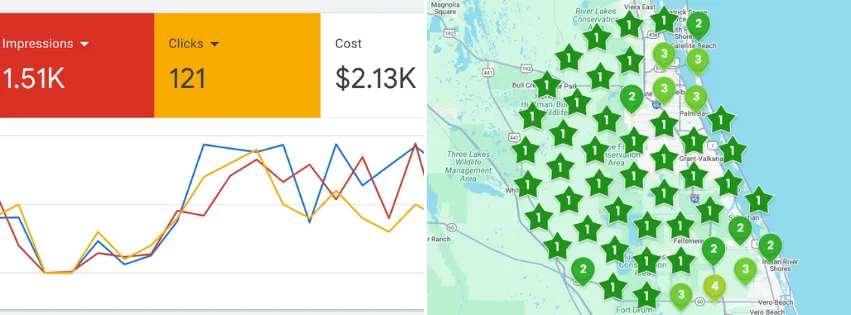
The owners with the healthiest books tend to run both: a handful of bids for base volume, plus their own steady flow of private leads from land clearing lead generation, local SEO and video-led Facebook ads. Then a lost bid is a shrug, not a crisis. As one example, TexTerra Solutions had $100K in pipeline three weeks after their ads went live.
Whichever source the lead comes from, the follow-up is where jobs are won or lost. A simple system for lead follow-up and nurturing keeps quotes from slipping through the cracks.
Stop Chasing Every Bid
If you are tired of racing other contractors to the bottom on public bids, it may be time to build a pipeline of private work that comes to you. We work only with land clearing, excavation, demolition and forestry mulching contractors.
Book a free strategy call and we will look at your market and show you where your next profitable jobs can come from.
Frequently Asked Questions
Where can I find land clearing jobs for bid?
Start with SAM.gov for federal work, your state procurement and DOT portals, and your county and city purchasing pages. Utility companies and electric co-ops often keep approved vendor lists for right-of-way clearing. Builders, developers and general contractors also send private invitations to bid to the subs on their lists.
How do I get land clearing contracts?
Register as a vendor on the public portals in your area, keep your insurance and paperwork current, and build relationships with local builders and general contractors. Submit complete, clearly scoped bids with photos of similar past work. Pairing bids with your own inbound leads keeps your schedule full when bids do not land.
Do I need to be bonded to bid on land clearing jobs?
It depends on the agency and contract size. Many smaller county and city jobs only require insurance, while larger federal and state contracts often require bid, performance and payment bonds. Read each bid package and talk to a surety agent before you bid on bonded work.
How do you bid a land clearing job?
Visit the site, measure the area, and assess density, tree size, terrain and access. Build your price from your true hourly cost, including mobilization, disposal, labor and overhead, then add profit. Spell out exactly what is included, such as how stumps and debris are handled.
Are government land clearing contracts worth it?
They can be, especially for steady volume and reliable payment. The tradeoffs are heavy paperwork, strict requirements, slower payment terms and tight price competition. Most contractors do best treating public bids as one part of their pipeline, not the whole thing.
How do I get on a builder or developer bid list?
Find out who is building in your area, then reach out with a short capability sheet showing your equipment, insurance, service area and past jobs. Ask how they send out invitations to bid for site work. Once you get a first job, showing up on time and leaving a clean site is what keeps you on the list.