
To start an excavation business, you need reliable equipment (usually a mini excavator or skid steer to begin), a registered company with the right state and local licenses, general liability and equipment insurance, and a simple pricing system you can defend. Most owners start lean with used or financed machines, take residential and small commercial jobs, then grow into bigger site work once they have cash flow, references and a steady source of leads.
Below is each step: what to buy, what it costs, the paperwork, pricing, first customers and moving up to higher-value work.
What It Takes to Start an Excavation Business
An excavation business needs four things before the first job: a machine you can count on, a legal business entity with the right licenses and insurance, a way to haul equipment and material, and a pricing method. Skill on the controls matters, but running the business side is what decides whether you last.
Most people who start in this trade already know how to run equipment. That is a big advantage, but it is only half the job. As the owner you are also the estimator, salesperson, bookkeeper, dispatcher and mechanic until you can afford to hire.
Before you buy anything, get clear on a few decisions:
- Your first service mix. Driveways, site prep, footings, utility trenching, septic installs, drainage, pond work and land clearing all need slightly different equipment and skills.
- Your service area. A 30 to 60 mile radius is common at the start. Drive time and trailer fuel eat margin fast.
- Your business entity. Many owners form an LLC to separate personal and business liability. Talk to a CPA or attorney about what fits your situation.
- Your cash runway. Plan for slow weeks, rain days and 30 to 60 day payment terms from builders and general contractors.
Excavation Equipment: Buy, Lease or Rent
Start with the smallest fleet that lets you take paying work, and rent anything you only need occasionally. Buying makes sense for machines you will run most weeks; leasing or financing protects cash; renting covers one-off jobs and lets you test a machine before you commit.
The core starter fleet for most residential excavation work looks like this:
- Mini excavator (roughly 3 to 8 tons). Handles trenching, footings, small ponds, drainage and tight-access residential work. It is the most common first machine.
- Skid steer or compact track loader. Grading, moving material, backfill and attachment work (mulcher, grapple, auger). A track loader handles soft ground better; a wheeled skid steer is cheaper and faster on hard surfaces.
- Larger excavator (roughly 12 to 25 tons). Basements, bigger ponds, commercial site work and heavier digging. Most owners rent this until the work justifies owning one.
- Dump truck and equipment trailer. You need a way to move machines and haul dirt, rock and debris. Many owners start with a gooseneck trailer and subcontract hauling until volume supports a truck. Check whether your truck and trailer combination requires a CDL in your state.
Here is how the three ownership options usually compare:
| Option | Best for | Upside | Downside |
|---|---|---|---|
| Buy (cash or loan) | Machines you run most weeks | Builds equity, lowest long-term cost, resale value | Big upfront cost or debt, you own repairs |
| Lease or finance | New owners protecting cash | Lower upfront cost, newer equipment, predictable payments | Higher total cost, usage and condition terms |
| Rent | One-off jobs and specialty machines | No long-term commitment, maintenance included | Expensive per day if used often, availability varies |
A practical rule many owners use: if you would rent a machine more than roughly a third of the month for several months running, it is time to look at buying or financing one.
How Much It Costs to Start an Excavation Business
A lean start with one used compact machine, a used truck and a trailer often lands somewhere around $75,000 to $150,000 including insurance and setup. A fuller fleet with a larger excavator and dump truck can run $300,000 or more. Prices vary widely by region, machine hours and the used market.
These are rough ranges to help you plan, not quotes. Always price equipment locally and get insurance quotes for your specific operation.
| Item | Rough used range | Rough new range |
|---|---|---|
| Mini excavator | $25,000 to $60,000 | $50,000 to $120,000 |
| Skid steer or compact track loader | $25,000 to $60,000 | $60,000 to $110,000 |
| Larger excavator (12 to 25 tons) | $80,000 to $200,000 | $200,000 to $350,000+ |
| Dump truck | $40,000 to $120,000 | $130,000+ |
| Equipment trailer | $8,000 to $20,000 | $15,000 to $35,000 |
On top of equipment, budget for insurance (often several thousand to $25,000+ in the first year, depending on coverage and fleet value) and business setup, licenses and permits (often a few hundred to a few thousand dollars, depending on your state).
Do not forget the costs that do not show up on a sticker: attachments and buckets, fuel, a shop or yard, tools, a laser level or grade system, a basic website, phone and accounting software. Keep a cash reserve that covers at least a couple of months of payments and insurance, because weather and slow payers will test you early.
Licensing, Bonding and Insurance
Licensing and insurance requirements for excavation contractors vary by state, county and city, so check with your state contractor licensing board and local building department before you take work. At a minimum, expect to register your business, carry general liability insurance and follow your state's 811 call-before-you-dig law on every job that breaks ground.
Here is what to look into:
- Business registration. Register your entity with the state, get an EIN and check whether your city or county requires a business license.
- Contractor license. Some states license excavation or general contractors at the state level; others leave it to local jurisdictions; some require nothing for certain work. Septic installation often has its own separate license or certification.
- Insurance. General liability is the baseline most customers and GCs ask for. Commercial auto covers your trucks. Inland marine or equipment coverage protects your machines from theft and damage. Workers' compensation rules depend on your state and whether you have employees.
- Bonding. Some licenses require a license bond. Public and larger commercial projects may require bid, performance and payment bonds. Your bonding capacity grows as your financials and track record grow.
- 811 and utility locates. Call 811 (or submit online) before you dig, wait the required time for utilities to be marked, and keep records. Hitting a gas or fiber line is expensive and dangerous, and it can end a young company.
- Safety rules. OSHA trenching and excavation standards apply to trench work, including protective systems for deeper trenches. Know them and train your crew on them.
Be ready to send your insurance certificate the same day a builder asks.
How to Price Excavation Work
Most excavation contractors price with one of three methods: an hourly rate per machine and operator, a day rate, or a per-unit or lump-sum bid based on quantities. Whatever method you use, the price has to cover equipment cost, labor, fuel, trucking, overhead and profit, not just what the guy down the road charges.
Rates vary a lot by region, but as a rough reference, many markets see compact machines with an operator somewhere around $90 to $150 an hour and larger excavators around $125 to $250 an hour, with trucking billed separately. Use those only as a gut check against your own numbers.
| Method | When it fits | Watch out for |
|---|---|---|
| Hourly rate | Small jobs, unknown conditions, repeat customers | Customers may worry about the final bill; set a minimum charge |
| Day rate | Full-day site prep, clearing, cleanup | Define what a day includes and who pays for mobilization |
| Per unit (per cubic yard, per linear foot) | Trenching, hauling, fill and grading with clear quantities | Bad takeoffs and rock or water surprises |
| Lump sum bid | Builders, GCs and bid work | All the risk is yours; include clear exclusions |
To build your rates, start from cost. Add up each machine's monthly payment, insurance, maintenance and fuel, divide by the hours you realistically bill (not the hours in the month), add operator wages and burden, add a share of overhead, then add profit. Charge a mobilization fee when you move equipment. Write exclusions into every quote: rock, unsuitable soils, groundwater, utility conflicts, permits and haul-off are the usual ones.
How to Land Your First Excavation Customers
Your first customers usually come from people who already know you, local builders who need a dependable sub, and homeowners searching Google for a nearby contractor. Show up on time, communicate clearly and leave the site clean, and those first jobs turn into referrals.
- Your network. Former employers, farmers, ranchers, realtors, plumbers, septic installers and concrete contractors all run into dirt work they need done.
- Home builders and remodelers. Small builders often struggle to find a dirt contractor who answers the phone and shows up. Be that contractor.
- Google Business Profile. Set it up the day you form the company, list your services and service area, add real job photos and ask every happy customer for a review.
- A simple website. One clear page per service, real photos, your service area and an easy way to call or request a quote.
For a deeper look at finding builder, GC and public work, read our guide on how to get excavation contracts.
How to Grow an Excavation Business Into Higher-Value Work
Growing an excavation business means moving from small, one-off residential jobs to larger, repeatable and higher-margin projects, and building a lead flow you control instead of waiting on word of mouth. That usually takes better equipment, a crew, stronger financials for bonding and consistent marketing.
Higher-value work often includes full residential site packages (clearing, pad, driveway, utilities and septic), subdivision and commercial site work, ponds and lakes, drainage and erosion control, and municipal or utility contracts. Each step up asks more of your estimating, cash flow and paperwork, so grow on purpose:
- Track job costs. Know which job types actually make money. Many owners find a few services carry the company.
- Package your services. Selling clearing, pad, driveway and utilities together raises the ticket and reduces the number of subs the customer has to manage.
- Hire before you burn out. A good operator or a part-time office person often frees you to estimate and sell.
- Add equipment when the work proves it. Use rental history and your backlog to justify the next machine.
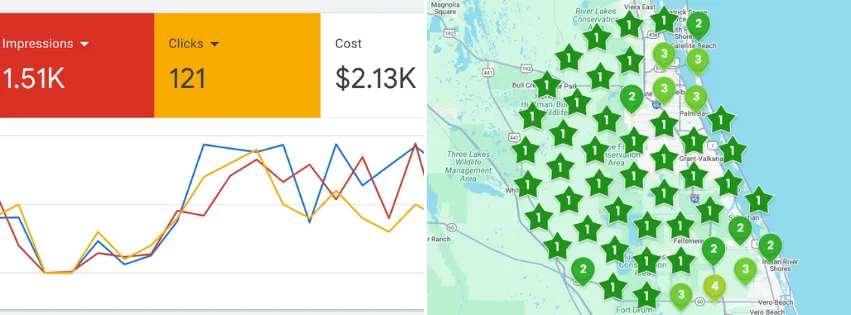
- Build a predictable lead source. Referrals are great but uneven. Search, Maps and paid ads let you turn lead flow up when you need work.
Marketing is where many good operators stall. The ones who grow treat it like equipment: an investment that has to pay for itself. That means a contractor website that turns visitors into calls, local SEO so you show up in Google Maps for the services you want, and ads aimed at the bigger jobs. One of our clients, All Seasons Excavating, made $125K in profit on a $500K lake build that came from leads we generated. Jobs like that change the year for a small company. If you want help with the marketing side, here is how our excavation marketing works.
Ready to Fill Your Schedule With Better Excavation Jobs?
Blue Goat Land Leads has worked only with land clearing, excavation, demolition and forestry mulching contractors since 2016. We build the websites, Google rankings and ad campaigns that bring in the jobs you actually want, and we track them back to revenue. Our clients average 5x to 15x ROI.
If you are starting out or ready to grow, let's talk through your market, your equipment and the work you want more of. Book a free strategy call and we will show you where your next jobs can come from.
Frequently Asked Questions
How much money do you need to start an excavation business?
Many owners start with roughly $75,000 to $150,000 in equipment, insurance and setup, often financed, using a used compact excavator or skid steer, a truck and a trailer. A larger fleet can push startup costs past $300,000. Costs vary by region and by how much you buy new versus used.
Is an excavation business profitable?
It can be, but profit depends on equipment utilization, accurate pricing and steady work. Owners who track job costs, charge for mobilization and trucking, and keep machines busy tend to do well. Idle equipment and underpriced bids are the most common profit killers.
What equipment do I need to start excavating?
Most new excavation contractors start with a mini excavator or a skid steer or compact track loader, plus a truck and equipment trailer. Larger excavators and dump trucks are often rented or subcontracted until the work justifies owning them. Your first services should guide your first machine.
Do you need a license to do excavation work?
It depends on your state and locality. Some states require a contractor license for excavation or for jobs above a certain dollar amount, while others leave it to cities and counties. Septic work often needs its own license, so check with your state licensing board and local building department.
How do excavation contractors charge for their work?
Common methods are an hourly rate per machine with operator, a day rate, per-unit pricing such as per cubic yard or linear foot, and lump-sum bids. Many contractors also charge a mobilization fee to move equipment. Rates vary widely by region and machine size.
How do I get more excavation customers?
Build relationships with home builders and general contractors, set up and maintain your Google Business Profile, ask every customer for a review and have a website that makes it easy to call. As you grow, local SEO and paid ads let you control how many leads come in instead of relying only on referrals.